Seawater Reverse Osmosis (SWRO) technology is a cornerstone in the desalination industry, enabling the conversion of seawater into freshwater for various applications. As a leading supplier of SWRO & BWRO (Brackish Water Reverse Osmosis) equipment, we often encounter challenges related to water with high organic content. In this blog, we will explore how our SWRO equipment effectively handles such challenging water sources. SWRO & BWRO Equipment

Understanding High Organic Content in Water
Organic matter in water can originate from various sources, including natural decomposition of plants and animals, agricultural runoff, and industrial waste. High organic content in seawater can pose significant challenges to the SWRO process. Organic substances such as humic acids, polysaccharides, and proteins can foul the membranes of SWRO systems. Membrane fouling occurs when these organic materials accumulate on the membrane surface, reducing the membrane’s permeability and increasing the operating pressure required to maintain the desired water production rate. This not only leads to higher energy consumption but also shortens the membrane’s lifespan, increasing the overall operating cost.
Pre – treatment Processes
Coagulation and Flocculation
One of the primary steps in handling water with high organic content is pre – treatment. Coagulation and flocculation are commonly used pre – treatment methods in our SWRO systems. Coagulants, such as aluminum sulfate or ferric chloride, are added to the water. These coagulants neutralize the negative charges on the organic particles, causing them to clump together. Flocculants are then added to form larger, more easily settleable flocs. By removing a significant portion of the organic matter at this stage, we reduce the load on the subsequent filtration and membrane processes.
Multi – Media Filtration
After coagulation and flocculation, the water passes through a multi – media filter. This filter typically consists of layers of different media, such as sand, anthracite, and garnet. The filter beds trap the flocs and other suspended solids, further reducing the organic load. The multi – media filter acts as a physical barrier, ensuring that only relatively clean water reaches the membrane system.
Ultrafiltration (UF)
In some cases where the organic content is extremely high, ultrafiltration is employed as an additional pre – treatment step. UF membranes have a pore size between 0.001 and 0.1 micrometers, which can effectively remove organic macromolecules, colloids, and bacteria. The use of UF not only provides a high – quality feed water for the SWRO membranes but also protects them from potential fouling.
Membrane Selection and Design
Membrane Chemistry
The selection of appropriate membranes is crucial for handling water with high organic content. We offer membranes with specific chemical properties that are more resistant to organic fouling. For example, some of our membranes have a hydrophilic surface, which helps to reduce the adhesion of organic molecules. Hydrophilic membranes can also facilitate the passage of water molecules while repelling organic substances.
Membrane Configuration
In addition to membrane chemistry, the membrane configuration also plays an important role. We design our SWRO systems with a proper membrane arrangement to ensure uniform water flow and minimize the accumulation of organic matter. Spiral – wound membranes are commonly used in our systems due to their high surface area and compact design. However, to prevent fouling, we optimize the spacing between the membrane layers and the feed spacer design to enhance cross – flow velocity and reduce the likelihood of organic deposition.
Operational Strategies
Chemical Cleaning
Despite the best pre – treatment and membrane selection, some level of fouling is inevitable over time. We have developed a comprehensive chemical cleaning protocol for our SWRO equipment. Depending on the type of fouling, different cleaning agents are used. For organic fouling, alkaline cleaners are often effective in breaking down and removing the organic deposits. However, the cleaning process must be carefully controlled to avoid damaging the membranes.
Monitoring and Control
Continuous monitoring of the system’s performance is essential for handling water with high organic content. We install various sensors in our SWRO systems to monitor parameters such as pressure, flow rate, conductivity, and turbidity. By analyzing these data in real – time, we can detect early signs of fouling and adjust the operating conditions accordingly. For example, if the pressure drop across the membrane increases, it may indicate fouling, and we can increase the cross – flow velocity or initiate a cleaning cycle.
Case Studies
We have successfully installed and operated our SWRO equipment in regions where the water has high organic content. For instance, in a coastal area with significant agricultural runoff, our system was able to produce high – quality freshwater by implementing a combination of pre – treatment processes, appropriate membrane selection, and smart operational strategies. The pre – treatment train, which included coagulation, flocculation, multi – media filtration, and ultrafiltration, effectively removed the majority of the organic matter. The selected membranes with anti – fouling properties maintained their performance over an extended period, resulting in a stable and efficient desalination process.
Conclusion
Handling water with high organic content is a complex but manageable challenge for our SWRO equipment. Through a combination of advanced pre – treatment processes, appropriate membrane selection and design, and effective operational strategies, we can ensure the reliable and efficient operation of our systems. Our commitment to innovation and continuous improvement allows us to provide the best solutions for our customers facing such challenging water sources.
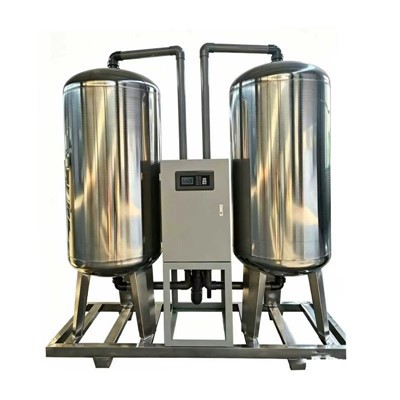
If you are in need of SWRO or BWRO equipment to handle water with high organic content, we invite you to contact us for a detailed discussion. Our team of experts is ready to understand your specific requirements and provide customized solutions. We look forward to the opportunity to work with you and contribute to your water treatment needs.
Reverse Osmosis Water System References
- "Desalination: Principles, Processes, and Technologies" by Wilfred F. Funk
- "Membrane Technology and Applications" by Richard W. Baker
- "Handbook of Industrial Water Treatment" by P. K. Ghosh and S. K. Gupta
Shandong Yanuo Environmental Protection Equipment Co., Ltd.
We’re well-known as one of the leading swro & bwro equipment manufacturers and suppliers in China, featured by quality products and good price. Please rest assured to buy bulk swro & bwro equipment made in China here from our factory. Customized orders are welcome.
Address: North Side of the Road, 1,000 Meters West of the Intersection of Fenghuangshan West Road and Provincial Highway S102, Wangfu Subdistrict, Qingzhou City, Weifang City, Shandong Province.
E-mail: ynhb.499973983@gmail.com
WebSite: https://www.zkyaruo.com/
