Can a Chamfering Tool be used for Countersinking?
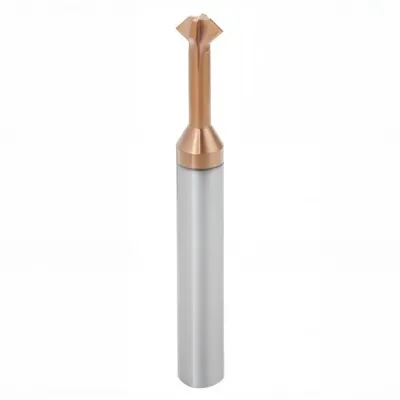
As a supplier of chamfering tools, I often get asked a variety of questions from customers, ranging from the basic usage of our products to more complex applications. One question that has come up quite frequently lately is: "Can a chamfering tool be used for countersinking?" This is an interesting query that delves into the versatility and limitations of chamfering tools, and I’m excited to share my insights on this topic. Chamfering Tool
Understanding Chamfering and Countersinking
Before we dive into whether a chamfering tool can be used for countersinking, it’s essential to understand what chamfering and countersinking are.
Chamfering is the process of creating a bevel or an angled edge on the corner or edge of a workpiece. This is typically done to remove sharp edges, which can be dangerous to handle and may cause injury. Chamfering also helps in the assembly process by allowing parts to fit together more easily. Chamfering tools come in various shapes and sizes, including hand-held tools, machine-mounted tools, and specialized tools for specific applications.
Countersinking, on the other hand, is the process of creating a conical hole at the end of a drilled hole. This is often done to allow the head of a screw or bolt to sit flush with the surface of the workpiece. Countersinking is crucial in applications where a smooth and even surface is required, such as in woodworking, metalworking, and electronics.
The Similarities between Chamfering and Countersinking
At first glance, chamfering and countersinking may seem quite different. However, there are some similarities between the two processes. Both chamfering and countersinking involve creating an angled surface on a workpiece. In both cases, the goal is to improve the functionality, safety, or aesthetics of the product.
Both processes also require the use of a cutting tool with a specific angle. For chamfering, the angle can vary depending on the application, but common angles are 30°, 45°, and 60°. For countersinking, the most common angle is 82° for standard machine screws and 90° for wood screws.
Can a Chamfering Tool be Used for Countersinking?
The answer to this question is: it depends. In some cases, a chamfering tool can be used for countersinking, but in other cases, it may not be the best choice.
When a Chamfering Tool Can Be Used for Countersinking
If the requirements for the countersink are not very strict, and the angle of the chamfering tool matches the required countersink angle, it is possible to use a chamfering tool for countersinking. For example, if you need to create a shallow countersink with a 45° angle, and you have a chamfering tool with a 45° cutting edge, you can use the chamfering tool to create the countersink.
This can be a cost-effective solution, especially if you already have a chamfering tool and don’t want to invest in a separate countersinking tool. It can also be useful in situations where you need to perform a small number of countersinking operations and don’t want to set up a dedicated countersinking machine.
When a Chamfering Tool Should Not Be Used for Countersinking
However, there are several reasons why a chamfering tool may not be suitable for countersinking.
Firstly, chamfering tools are designed to create a bevel on the edge of a workpiece, while countersinking tools are designed to create a conical hole at the end of a drilled hole. The geometry of the two tools is different, and using a chamfering tool for countersinking may not result in a precise or consistent countersink.
Secondly, countersinking often requires a specific depth of cut, which can be difficult to achieve with a chamfering tool. Countersinking tools are typically designed with a depth stop or a way to control the depth of the cut, ensuring that the screw head will sit flush with the surface of the workpiece. Chamfering tools, on the other hand, are not usually equipped with such features.
Finally, if the application requires a high level of precision, such as in aerospace or medical device manufacturing, it is recommended to use a dedicated countersinking tool. These tools are designed to meet the strict tolerances and quality requirements of these industries.
Factors to Consider When Deciding Whether to Use a Chamfering Tool for Countersinking
Angle Compatibility
As mentioned earlier, the angle of the chamfering tool must match the required countersink angle. If the angles do not match, the resulting countersink will not be correct, and the screw head may not sit flush with the surface.
Depth Control
If the depth of the countersink is critical, a chamfering tool may not be the best choice. Look for a tool that allows you to control the depth of the cut accurately.
Material and Workpiece Requirements
The type of material you are working with and the requirements of the workpiece also play a role. For soft materials like wood or plastic, a chamfering tool may be sufficient for countersinking. However, for hard materials like metal, a dedicated countersinking tool may be necessary to ensure a clean and precise cut.
Quantity of Work
If you need to perform a large number of countersinking operations, it may be more efficient to use a dedicated countersinking tool. Chamfering tools may be slower and less precise when used for high-volume countersinking.
Conclusion
In conclusion, while it is possible to use a chamfering tool for countersinking in some cases, it is not always the best option. The decision depends on several factors, including the angle compatibility, depth control requirements, material and workpiece requirements, and the quantity of work.
As a supplier of chamfering tools, I understand the importance of choosing the right tool for the job. We offer a wide range of chamfering tools that are designed to meet the diverse needs of our customers. If you have any questions about whether a chamfering tool is suitable for your countersinking needs, or if you are looking for advice on choosing the right tool, please don’t hesitate to contact us. Our team of experts is always ready to assist you in making the best decision for your specific application.
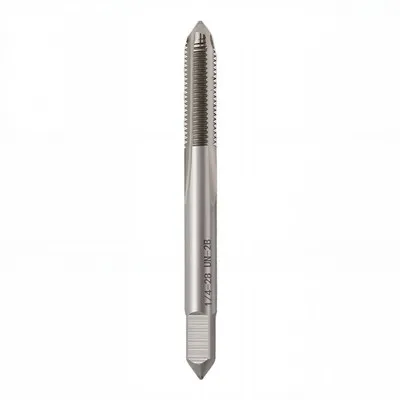
Threading Tools If you are interested in purchasing chamfering tools or would like to discuss your requirements further, we welcome you to reach out to us for a detailed consultation. We are committed to providing high-quality products and excellent customer service, and we look forward to working with you to meet your machining needs.
References
- Machinery’s Handbook, 31st Edition. Industrial Press Inc.
- ASME B94.33-1997 (R2012) – American National Standard for Countersinks.
Small Craftsman (Shandong) Machine & Tools Co., Ltd.
Small Craftsman (Shandong) Machine & Tools Co., Ltd. is one of the most experienced chamfering tool manufacturers and suppliers in China, also supports customized service with low price. Please feel free to buy bulk high quality chamfering tool in stock here from our factory. Contact us for pricelist.
Address: No.9 Quanxin Rd., Sishui Economic Developing Zone, Jining, Shandong, China.
E-mail: 6196@ocutchina.com
WebSite: https://www.ocutooling.com/
