As a PMMA exhaust gas treatment equipment supplier, I’m often asked one question more than any other: “What’s the maintenance cost?” It makes sense—for manufacturing facilities, purchasing new exhaust gas treatment gear is only half the battle; the long-term upkeep can make or break a project’s ROI. PMMA, or polymethyl methacrylate, is a versatile material used in everything from automotive parts to acrylic signage, but its production releases volatile organic compounds (VOCs), methacrylate monomers, and trace corrosive gases that require specialized handling. Cut corners on maintenance, and you’ll face efficiency drops, compliance fines, and even equipment failure. Get it right, and your system will run reliably for years without blowing your budget. Let’s break down the numbers, the hidden costs, and how to plan for them so you can avoid costly surprises. PMMA Exhaust Gas Treatment Equipment

First, let’s ground this in context: PMMA exhaust gas treatment systems aren’t one-size-fits-all. Most of our clients opt for two core configurations: wet scrubbers (the most common for high-load methacrylate emissions) and thermal oxidizers (for breaking down stubborn VOCs). Maintenance costs shift based on your system type, your production volume, and the air quality in your facility—but we’ve found a consistent range for typical mid-sized operations (10,000 to 50,000 cubic meters per hour of exhaust flow) runs between 2% and 8% of the original equipment cost (OEC) annually. Wait, that’s a wide gap, right? Let’s unpack why. A system running 24/7 for a 24/7 PMMA extrusion line will have higher wear than a system that shuts down on weekends. A wet scrubber in a plant with hard, mineral-laden process water will need more frequent part replacements than one using deionized water. Those variables are what make maintenance planning tricky, but they’re also predictable if you know what to look for.
Let’s start with the most common system: wet scrubbers, which account for 70% of PMMA treatment setups we deliver. Their maintenance falls into two buckets: routine scheduled checks and unexpected corrective repairs. Routine costs are the only part you can easily predict, and they usually make up 60% of total annual maintenance. For a mid-sized wet scrubber with a $150,000 OEC, that’s roughly $1,800 to $6,000 per year for routine tasks. These tasks include weekly pH testing of the scrubber liquid (critical because methacrylate gases react with water to form weak acids, and an unbalanced pH will corrode internal parts), monthly filter inspections and backwashing, and quarterly fan blade lubrication. The rest of routine costs are part replacements that you should budget for annually: scrubber nozzles, which get clogged with polymer residue from PMMA emissions, usually need to be replaced every 12 to 18 months—costing $200 to $500 per set. The mist eliminator, which removes liquid droplets from cleaned exhaust, will also accumulate residue every 18 to 24 months; a new set runs $800 to $1,500.
Now, the corrective repairs for wet scrubbers are where costs can blow up. PMMA’s emissions are uniquely aggressive here. Methacrylate vapors polymerize easily, turning into a sticky, plastic-like substance that coats every surface inside the scrubber. If you skip monthly inspections, that polymer can build up until it blocks nozzles, reduces airflow, and even causes pressure on the scrubber’s internal walls. We had a client last year who delayed a scrubber cleaning for six months; the polymer buildup caused a 30% drop in treatment efficiency, and they ended up needing to replace $12,000 worth of corroded nozzle manifolds and a $5,000 fan motor that burned out from overworking to push air through the blockages. That’s a $17,000 unexpected cost—more than twice their total routine maintenance budget for the year. On the flip side, a client who follows our monthly cleaning schedule spends just $1,500 annually on corrective work, mostly for minor seal replacements.
Next, thermal oxidizers, which we recommend for clients with high VOC concentrations (over 1,000 parts per million) in their PMMA exhaust. These systems burn the emissions at 800 to 1,200 degrees Celsius, breaking them down into CO2 and water. Their maintenance is a bit different, and typically runs 4% to 8% of OEC annually for mid-sized units. The big costs here are burner maintenance and heat exchanger upkeep. Burners for thermal oxidizers need to be inspected every three months to prevent incomplete combustion, which would release unbroken VOCs and lead to compliance issues. A minor burner tune-up costs $300 to $700, but if you let soot and polymer residue build up on the burner nozzle, you can face a $2,000 to $4,000 replacement. The heat exchanger, which recycles heat from the burned gases to reduce energy costs, is another high-wear part. PMMA combustion releases trace amounts of corrosive gases, which can pit the heat exchanger’s metal walls over time. For a mid-sized thermal oxidizer, a full heat exchanger inspection and cleaning runs $1,200 to $2,500, and replacements can cost $20,000 to $35,000—hardly a small expense. We’ve found that clients who add a monthly polymer cleaning step to their thermal oxidizer schedule cut their heat exchanger replacement risk by 75%, saving them tens of thousands over the system’s 10-year lifespan.
Beyond the system-specific costs, there are two hidden maintenance expenses that most clients don’t plan for: compliance-related checks and energy efficiency losses. Let’s talk about compliance first. In most regions, PMMA production is regulated by environmental agencies, which require annual testing of exhaust emissions to confirm your treatment system is working. A third-party emissions test for a mid-sized PMMA plant costs between $500 and $1,200, but if your system is underperforming, you’ll need to adjust it, which adds $300 to $1,000 in technician time. Worse, if you fail a test, fines can range from $10,000 to $100,000 depending on your region and the severity of the violation—costs that far outweigh even the most proactive maintenance budget. We had a client in Ohio in 2022 who skipped a $1,200 emissions test and ended up with a $45,000 fine plus mandatory system upgrades totaling $30,000; that’s a $75,000 mistake they still talk about in our weekly training sessions.
Then there’s energy efficiency. When your maintenance is delayed, your system uses more energy to push air through clogged parts or compensate for reduced efficiency. For a typical wet scrubber, a 10% drop in efficiency from polymer buildup can add $1,200 to $2,500 annually to your utility bills. For a thermal oxidizer, inefficient combustion from a dirty burner can increase energy use by up to 20%, adding $5,000 to $8,000 per year in costs. That’s not a one-time expense—it’s an ongoing drain that accumulates year after year. A client we work with in Texas calculated that their proactive maintenance schedule saved them $7,000 annually in energy costs alone, on top of their $5,000 annual maintenance budget. That’s a 140% return on their maintenance investment before even counting avoided part replacements or fines.
Now, let’s turn to how you can keep maintenance costs low without cutting corners. As an equipment supplier, we don’t just sell systems—we provide 24/7 support, customized maintenance checklists, and predictive monitoring tools to help our clients avoid surprise costs. The biggest step is to tailor your maintenance plan to your specific PMMA process. For example, if you run a small PMMA sign shop with low-volume, intermittent exhaust, you can get away with bi-weekly checks instead of weekly ones, cutting your routine costs by 30%. If you run a 24/7 extrusion plant, you’ll need to invest in automated residue sensors that alert you when buildup reaches a critical level, so you only clean when necessary, not on a rigid schedule.
Another key tip: choose equipment designed specifically for PMMA emissions, not generic exhaust systems. Generic scrubbers or oxidizers often use cheaper materials that corrode faster or have no way to resist polymer buildup. For example, we line our wet scrubber manifolds with food-grade polyethylene and add anti-polymer coatings to mist eliminators, which cuts part replacement frequency by 50% compared to uncoated competitors. We also install digital monitoring tools that track pressure, pH levels, and temperature in real time, so our clients can spot a clog or corrosion before it causes a major breakdown. Last year, one of our clients used our monitoring system to catch a minor pump seal leak two weeks before it would have caused a system shutdown, saving them an estimated $10,000 in lost production and repairs.
Let’s wrap this up with a real-world example to make the numbers tangible. Take a mid-sized PMMA extrusion plant with a 30,000 cfm wet scrubber, purchased for $150,000. Here’s their annual maintenance budget breakdown when following our recommended plan: Routine parts and checks ($4,500), corrective repairs (including nozzle replacements and seal checks, $1,500), compliance testing ($800), and energy efficiency gains (savings of $7,000). That’s a total annual maintenance cost of $6,800, but their net savings from energy and avoided fines add up to $5,500—meaning their real out-of-pocket cost is just $1,300 per year. Compare that to a plant that skips routine checks, has an average of $8,000 in annual corrective repairs, $1,000 in compliance tests, and loses $2,500 in energy efficiency—their total cost is $11,500 per year. That’s more than 8 times the cost of our recommended plan, and they’re at high risk for a $10,000+ fine or system shutdown.
The takeaway here is simple: maintenance isn’t an expense—it’s an investment. For PMMA exhaust gas treatment, the cost is manageable if you plan ahead, tailor your schedule to your operation, and work with a supplier who understands the unique challenges of methacrylate emissions. Cutting corners now will only lead to far larger costs down the line, from emergency repairs to compliance fines.
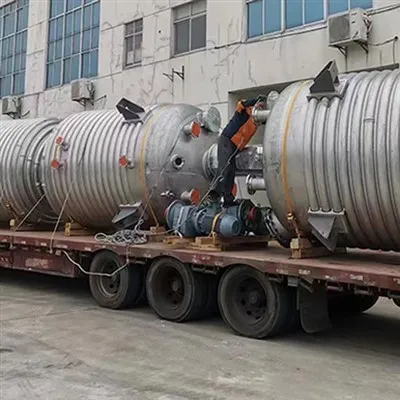
If you’re tired of guessing at your PMMA exhaust system’s maintenance costs, or you’re looking to upgrade to a system that’s built for long-term reliability, we can help. Our team will conduct a free on-site assessment of your process, your current equipment, and your production volume to create a customized maintenance plan that fits your budget and keeps your emissions compliant and efficient. Reach out to our team today to learn more about how to lower your long-term costs and avoid unnecessary downtime.
PMMA Cracking Furnace References
- U.S. Environmental Protection Agency. (2021). Industrial Exhaust Gas Treatment Guidelines for Polymer Manufacturing.
- International Society of Automation. (2022). Predictive Maintenance for Industrial VOC Control Systems.
- PMMA Manufacturers Association. (2023). Best Practices for Exhaust Emission Control and Equipment Upkeep.
- National Institute for Occupational Safety and Health. (2020). Corrosion Risks in Wet Scrubbers for Methacrylate Emissions.
- Energy Star. (2022). Energy Efficiency Savings for Industrial Air Pollution Control Equipment.
Wuxi Quansheng Industrial Equipment Co., Ltd.
As one of the most professional PMMA exhaust gas treatment equipment manufacturers and suppliers in China, we have world-leading production equipment and strong manufacturing capabilities. Welcome to buy high quality PMMA exhaust gas treatment equipment for sale here from our factory. For price consultation, contact us.
Address: No.10, Fulaiqiao Road, Hudai Town, Binhu District, Wuxi City, Jiangsu Province, China
E-mail: 397293586@qq.com
WebSite: https://www.pmmatech.com/
