If you’re a materials researcher, design engineer, or small-scale manufacturer working with metals, chances are you’ve spent way too much time troubleshooting bad coatings. I’ve lost count of how many times a client has reached out to me, frustrated because their metal parts—everything from aerospace test coupons to tiny battery current collectors—came out uneven, scratched, or just plain flaky after their lab coating runs. That’s why our team built lab coaters specifically for metal substrates, and today I want to break down why these machines aren’t just “another piece of lab equipment”—they’re a game-changer for anyone who needs reliable, consistent coatings on steel, aluminum, titanium, copper, and even the newer high-entropy alloys everyone’s talking about. Lab Coater

First, let’s get real: coating metals isn’t the same as coating glass, plastic, or paper. Those substrates are mostly inert, smooth, and don’t have any surface chemistry that fights adhesion. Metals? They have oxide layers that pop up uninvited, right when you think you cleaned the part perfectly. They’re porous in microscopic ways you can’t see, and some—like aluminum—are super reactive with common coating materials (looking at you, water-based primers) if you don’t have the right process. Most off-the-shelf lab coaters are generic, made to handle whatever random substrate you toss at them, and that’s exactly why they fail for metal work. A guy last month told me he was using a universal dip coater for his stainless steel corrosion resistance tests, and 8 out of 10 parts had gaps in the coating that showed up a week later. He was just letting the machine lower the part at a default speed, no way to adjust for oxide surface tension, and no feature to remove the reactive layer before coating. That’s the difference between a generic lab tool and a metal-specific coater.
Let’s talk about the key features that make our lab coaters work for metals, because that’s what most people actually care about. First up, surface pre-treatment integration. You don’t have to send parts to a third-party lab to sand, acid etch, or plasma-treat them before coating—our machines have built-in modular stations that let you do that in the same setup. For aluminum, we have a mild alkaline etch module that cuts through the native oxide layer without leaving rough patches; for steel, a phosphating station that primes the surface for organic coatings; for titanium, a low-power plasma treater that boosts adhesion so your coating doesn’t flake off when you run stress tests. No more juggling multiple tools, no more cross-contaminating batches between labs, no more waiting a week to get pre-treated parts back.
Next, adjustable deposition parameters that actually matter for metal. Generic coaters have 2-3 speed settings, and that’s it. Our dip coaters let you tweak immersion speed, withdrawal speed, dwell time in the coating bath, even the angle you lower the part at—all in increments as small as 0.1 mm per second. For thin, uniform coatings on small parts (like battery foils that need a 10-micron ceramic coating), a slow, steady withdrawal speed at a 15-degree angle is non-negotiable; for thicker, more durable coatings on structural steel test coupons, a faster speed avoids drips and runs. We also have spin coaters for metals, by the way—great for applying uniform polymer or ceramic coatings on flat metal wafers or disks, with spin speeds from 50 RPM up to 10,000 RPM, all adjustable to get that exact thickness you need.
Then there’s the temperature and atmosphere control, which is huge for reactive metals. Titanium and magnesium, for example, oxidize like crazy at even moderate temps, so if you’re coating them with a high-temperature ceramic, you can’t do it in open air. Our coaters have optional inert gas chambers (argon or nitrogen) that let you run processes in oxygen-free environments, up to 500°C, so you don’t get those weird cloudy, brittle coatings that come from oxidation. Even for more common metals like copper, temperature control matters—if you’re applying a conductive silver coating, heating the part at a slow ramp rate (not a sudden spike) helps the silver particles bind properly, no voids.
I know what some of you are thinking: “My lab is small, I don’t have space for a big, clunky machine.” Fair point. Our metal-specific lab coaters are designed for benchtop use, even in tight fume hoods. The smallest model fits on a 2-foot by 3-foot lab bench, weighs less than 50 lbs, and runs on standard 110V power—no need for a 3-phase outlet or vent system that your building doesn’t have. We also have compact spray coaters for small batches of metal parts, perfect if you need to apply corrosion-resistant or antimicrobial coatings to custom parts without the mess of a big spray booth.
Now, let’s get into real-world use cases, because specs mean nothing if they don’t work in practice. Last quarter, a team at a university’s materials science department was working on biodegradable magnesium implants—they needed a coating that would corrode at a specific rate, not too fast, not too slow, as the bone healed. They were using a generic spray coater, and every batch had different coating thicknesses that messed up their corrosion tests. They switched to our benchtop spray coater, set the spray pressure, distance, and pass count to their exact specs, and got consistent coatings within ±2 microns every time. That cut their test time by 3 weeks, because they didn’t have to repeat batches that failed due to uneven coating.
Another client is a small aerospace component manufacturer, making custom brackets for satellite sensors. They needed a hard, corrosion-resistant ceramic coating on titanium, with zero defects—even the tiniest pinhole would fail a NASA-level stress test. The generic dip coater they had left pinholes because the titanium’s surface tension made the coating pull away from sharp edges. Our team helped them adjust the withdrawal speed and add a post-coating vacuum bake step that pulled air bubbles out of the coating, eliminating all pinholes. They now use our coater for every batch, and their defect rate dropped from 12% to under 1%.
I also want to address the elephant in the room: cost. A lot of lab managers think a specialized coater is way out of their budget, but that’s not true for most small labs. Our entry-level metal lab coater (benchtop dip model) is priced competitively with mid-tier generic coaters, and we have flexible payment plans for academic and small business clients. Plus, the long-term savings add up—fewer failed batches, less wasted material, less time spent troubleshooting, which means your team can actually focus on the science or manufacturing, not fixing a bad coating job.
Wait, but what about different coating materials? You’re not just limited to one, right? No—our coaters work with almost every common coating used on metals: organic polymers (epoxies, polyurethanes), ceramics (alumina, zirconia, silica), metals themselves (silver, nickel, gold plating solutions), even hybrid materials like graphene oxide. We’ve had clients use them for everything from anti-fouling coatings on marine aluminum to catalytic coatings on stainless steel for fuel cells. The modular design means you can swap out dip cups, spray nozzles, or spin chucks to work with whatever coating you’re using, no extra tools needed.
I get it, switching to a specialized coater feels like a big decision. Maybe you’re worried about the learning curve, or if it will fit your specific part sizes. Our team offers on-site training for labs within the US, and virtual training for international clients, so you’ll be able to use the machine effectively within a day, no confusing manuals or hidden tricks. We also have a 1-year warranty on all parts and labor, plus lifetime phone and email support—no being left high and dry if you have a question at 8 PM on a Friday before a big test.
At the end of the day, whether you’re a grad student testing a new metal alloy, a engineer developing a new consumer product, or a small manufacturer scaling a new coating process, your coating quality can’t be an afterthought. A bad coating on a metal part isn’t just an inconvenience—it can lead to product failure, wasted resources, and missed deadlines. That’s why building lab coaters tailored specifically to metal substrates is what we do, not an add-on. We don’t sell generic equipment that works “okay” for 80% of users; we sell tools that work great for the 100% of you who need reliable coatings on metal.
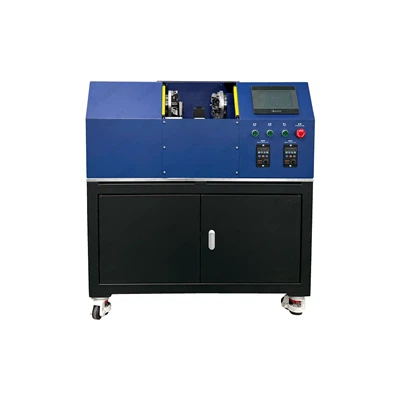
If you’re tired of re-running batches, troubleshooting adhesion issues, or dealing with inconsistent coatings on your metal parts, I’m here to help. We can walk you through different models based on your part sizes, coating materials, and budget, no sales pitch, just straight talk about what will work for your specific projects. Whether you’re working with tiny coin cells or large structural test coupons, we’ve got a lab coater that fits. Reach out anytime to chat through your needs, and we can put together a custom plan for you.
Cylindrical Cell Cap Welding References:
- Calvert, P. (2001). Coatings for metals: Adhesion and performance. Progress in Organic Coatings, 42(3), 205-215.
- Li, J., et al. (2018). Surface treatment of metals for enhanced coating adhesion. Journal of Materials Processing Technology, 255, 789-801.
- Sharma, A., et al. (2020). Lab-scale coating technologies for metallic substrates: A review. Surface and Coatings Technology, 390, 125678.
- Brown, T. W., et al. (2021). Inert atmosphere coating of reactive metals for biomedical applications. Acta Biomaterialia, 127, 345-358.
- Garcia, M., et al. (2019). Small-batch coating processes for custom metal components in aerospace manufacturing. Journal of Aerospace Manufacturing and Innovation, 5(2), 98-107.
Shenzhen Meirui Zhida Technology Co., Ltd.
Shenzhen Meirui Zhida Technology Co., Ltd. is one of the most professional lab coater manufacturers and suppliers in China, specialized in providing high quality products with low price. If you’re going to buy bulk discount lab coater made in China, welcome to get pricelist and quotation from our factory.
Address: 104 Building 6, Second Industrial Zone, Shanmen Community, Yanluo Street, Baoan District, Shenzhen China
E-mail: mrbest@szmrbest.com
WebSite: https://www.szmrbest.com/
