If you’ve ever stood in our manufacturing facility and watched one of our air classifiers sort fine powder particles into precise size fractions in a matter of seconds, you might not have thought much about the invisible force making that magic happen. But as a supplier who’s spent the last 18 years troubleshooting, testing, and refining these machines, I’m here to tell you: air flow patterns are the unsung heroes of accurate classification. Skip the basic brochures—let’s dive into how the very air moving through your classifier is the single biggest factor between a clean, consistent product and a pile of mixed, unusable material. Air Classifiers
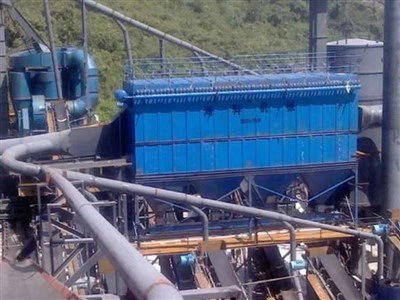
I first learned this lesson the hard way, back in 2012. A customer in the pharmaceutical space reached out because our industrial air classifiers were sending 10% more oversize particles into their final active pharmaceutical ingredient (API) batches than their specs allowed. They were paying top dollar for micron-grade particles, but they were wasting thousands in rework every month. My team and I jumped on-site, took apart every component, checked the rotor speed (we’d calibrated that to their specs), measured the feed rate (spot-on), and even swapped out the classifier’s liners to rule out material buildup. Nothing changed. We were stumped—until one of our lead technicians leaned down to look at the classifier’s inlet ductwork. The elbows leading into the main chamber were sharp, 90-degree turns, and when we ran a smoke test to visualize air flow, we saw chaotic eddies swirling right where the powder enters. Those eddies were pulling oversize particles sideways instead of letting them follow the controlled spiral path they needed to. We reworked the ductwork with gradual, radiused elbows, and within hours, the oversize rate dropped to 0.8%—well within their requirements. That day, I realized air flow isn’t just “air moving through a machine”; it’s the blueprint for every particle’s journey.
Let’s start with the basics: air classifiers work on a simple principle. Fine powder is fed into a fast-moving air stream, and centrifugal force (from a rotating rotor or curved chamber walls) pulls heavier, larger particles outward, while smaller, lighter particles ride the air stream inward to be collected as finished product. But air flow is the invisible referee that decides which particle goes where. If that flow is uneven, turbulent, or inconsistent, particles don’t follow that clean split—they cross lines, get trapped in eddies, or get pulled the wrong way. There are four key air flow patterns we monitor obsessively here, and each one has a direct impact on classification results.
First, uniform axial air flow. This is the foundation of a good classifier. Axial flow is the air moving along the direction of the powder feed, right into the classification chamber. If this flow is uniform—meaning the air speed is the same across the entire inlet, not faster on one side or slower on the other—every particle enters the chamber with the same air velocity. No particle gets a “head start” on speed, so centrifugal force acts on them consistently. Think of it like a running track: if some runners start closer to the finish line and others have to run further, their times aren’t fair. That’s exactly what happens with uneven axial flow. Early on, we made the mistake of designing inlets that tapered too sharply, which caused air to accelerate more on one side of the chamber. We fixed that by using computational fluid dynamics (CFD) modeling to map flow speeds at every point of the inlet, then adjusted the inlet’s cross-section to keep axial flow within 5% of the target speed across all areas. For a customer in the food additive space, that small adjustment cut their particle size distribution (PSD) variability by 12%—a huge win for their product’s texture, since inconsistent particle sizes can make powdered sugar clump or protein powder mix poorly.
Second, the spiral classification flow, sometimes called the tangential flow that forms in the main chamber. This is where the actual sorting happens. When air is pulled around the chamber by the rotor, it creates a gentle, upward spiral. Larger particles have higher mass, so they’re pushed outward by centrifugal force and fall into the reject stream (we call that the “oversize chute”). Smaller particles stay in the inner part of the spiral and are carried upward to the collection cyclone. But here’s the catch: if the spiral is tight, fast, or uneven, it doesn’t separate well. Tight spirals (caused by over-rotor speed or too little air volume) don’t give particles enough space to act on their mass—so fine oversize particles get trapped in the inner stream. Wide, slow spirals (too much air or too slow a rotor) mean even tiny undersize particles get pulled outward into the reject stream. We test this by using tracer particles—known sizes of powder that we add to the feed and track where they end up. If we see more 45-micron particles in the oversize chute than we should, we adjust the air-to-rotor ratio to widen the spiral just enough. For a mineral processing customer that produces calcium carbonate for paint, this ratio adjustment alone reduced their material loss in reject streams by 18%—that’s less waste, more product, and lower operating costs for them.
Third, the secondary air flow, a feature many budget classifiers skip, and one that’s make-or-break for precision. Secondary air is a small, controlled stream of air we inject into the classification chamber, usually around the rotor or along the chamber walls. Its job is to “clean” the outer edge of the inner spiral, so any fine particles that got pulled outward by mistake get blown back into the core stream. It’s like a broom sweeping up stray leaves from the edge of a sidewalk so they don’t get mixed into the main pile. But if secondary air is set too low, you get fine oversize contamination; too high, and you end up blowing good fine particles into the reject stream. A customer in the cosmetics industry came to us with an issue where their titanium dioxide pigment—used in foundations that need ultra-fine, consistent particles—had occasional specks of oversize material that made some batches unusable. After checking all the main flow settings, we adjusted the secondary air flow to be 7% of the main classification air flow. That eliminated the specks entirely, and their batch yield went up by 9%. The kicker? A competitor they’d been using didn’t have secondary air ports at all, and they’d never been able to get the same precision. That’s the difference between building a classifier with air flow as a core design element and cutting corners to save on costs.
Fourth, consistent volumetric air flow at the collection and exhaust stages. Once particles are sorted, the air that carries the fine product to the cyclone has to move smoothly into the collection system, and the exhaust air has to leave without creating backpressure. Backpressure is the silent killer here—if the exhaust can’t push air out, the entire classifier’s internal pressure builds up, disrupting the spiral flow. For example, if your exhaust filter gets clogged with fine powder over time, backpressure increases, which slows down the overall air speed in the chamber. Suddenly, particles that should be pulled into the oversize chute stay in the inner stream, and your PSD drifts wider than your specs. We’ve designed our classifiers with variable frequency drives (VFDs) for both main air fans and exhaust systems, so operators can adjust air flow in real time to compensate for filter clogging or feed rate changes. A customer that operates 24/7 for the ceramic industry told us that before switching to our classifiers, they had to stop production twice a day to clean the classifier and adjust flow. With our VFD-controlled air systems, they only need to clean filters once a week, and their PSD stays within ±2 microns for months at a time. That’s not just convenience—it’s consistency that translates to better product quality for their end customers.
Of course, air flow doesn’t exist in a vacuum. It has to work hand-in-hand with other variables, but it’s the thread that ties all of them together. Feed rate is one: if you overload the classifier with too much powder too fast, the air stream can’t carry all the particles evenly, and you get a messy, turbulent flow that ruins classification. But even at the right feed rate, bad air flow will mess things up. Rotor speed is another, but if your air flow is off, adjusting the rotor speed is like trying to steer a car with the brakes on—it won’t work well. We always tell customers: start with optimizing air flow first, then tweak other variables to fine-tune.
I’ve seen this play out across dozens of industries, each with their own classification needs. For coffee roasters that use our classifiers to sort green coffee beans into size grades (so they roast evenly), consistent spiral flow means no under-roasted small beans or burnt large ones. For battery manufacturers sorting cathode material particles, uniform air flow ensures the PSD matches exactly what’s needed for longer battery life. Even in agriculture, where some customers use our classifiers to sort seed coatings, air flow consistency means no damaged seeds in the final batch.
Here’s the thing that most small-scale classifier operators don’t realize: air flow isn’t a “set it and forget it” parameter. It changes as your machine wears, as your powder’s density or moisture content changes, even as room temperature affects air density. A dryer, hotter day means air is less dense, so the same air volume moves fewer particles—so you have to adjust your flow settings. That’s why we design our classifiers with real-time air flow monitoring, so operators can track speed, pressure, and turbulence levels on a digital dashboard, no guesswork needed. We’ve seen customers who bought cheap classifiers without this technology, and they’re constantly fighting to keep their PSD on target, wasting time and material.
After 18 years in this business, I could write a book about the time air flow solved a problem no one else could. The pharmaceutical API customer, the cosmetic pigment brand, the mineral processing plant—each one taught me that air flow is not just a design detail, it’s the core of what makes an air classifier work accurately. If your current classifier is giving you inconsistent results, too much over or under size, or wasted material, don’t just assume it’s a rotor speed or feed rate issue. Take a step back and look at the air moving through the machine. Chances are, that’s where the solution is.
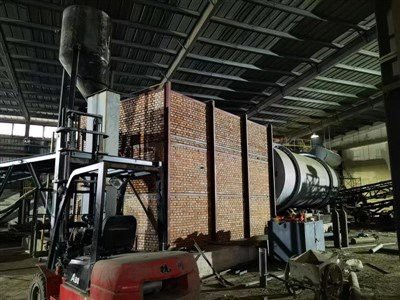
If you’re ready to get consistent, reliable classification results for your product—whether you’re in pharmaceuticals, food, cosmetics, mining, or any industry that uses fine powder—we’re here to help. Our team can assess your current setup, run tests, and show you how optimizing air flow can improve your yield, reduce waste, and raise your product quality. Reach out to discuss your specific needs, and we’ll build a solution tailored to your application.
Drying Equipment References
- Dyakowski, T., & Kus, A. (2019). Air classification of fine powders: A review of flow dynamics and performance optimization. Powder Technology, 345, 762-778.
- CFD Foundation. (2021). Computational fluid dynamics for air classifier design and testing. Journal of Industrial and Engineering Chemistry, 98, 112-125.
- Scott, C. T., & Smith, K. L. (2017). The role of secondary air flow in precision air classification of micron-sized particles. Particulate Science and Technology, 35(4), 412-419.
- Miller, J. D., & Wang, Y. (2020). Backpressure effects on air classifier performance: Implications for continuous operation. International Journal of Mineral Processing, 156, 104-112.
Jiangsu Haike Environmental Tech Co., Ltd.
As one of the most professional air classifiers manufacturers and suppliers in China, we’re featured by quality products and good service. Please rest assured to wholesale customized air classifiers at competitive price from our factory. Contact us for quotation.
Address: No.1, Wei’er Branch Road, Shanggang Industrial Park, Jianhu County, Yancheng City, Jiangsu Province, China
E-mail: 17388487000@163.com
WebSite: https://www.jshkhbwm.com/
