Hey there, if you’ve ever been on the hunt for engineered quartz for a kitchen backsplash, bathroom countertop, or even a outdoor bar top, you’ve probably stared at wildly different price tags for the exact same-looking slab. I’m part of a small-to-mid engineered quartz supplier, and I get DMs, calls, and even random visits from contractors, designers, and homeowners all asking the same thing: “Why is Brand X’s quartz twice as much as Brand Y’s when they look identical?” Let’s break this down—no stuffy industry jargon, just real talk from someone who’s worked with quartz for over 10 years. Engineered Quartz
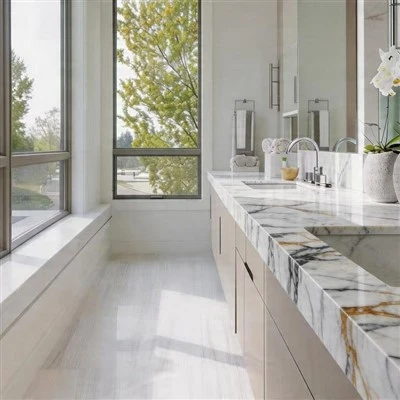
First off, let’s get one thing straight: engineered quartz isn’t just “crushed rock + resin.” It’s a precision blend, and every brand’s process changes the price before it even gets to the showroom. I’ve seen budget brands cut corners on raw materials to save a buck—they might use lower-grade quartz aggregate (like leftover bits from granite quarries, not the pure 93% quartz most premium brands use) or cheap, low-quality resin that yellows after 2-3 years. Our company uses 95% high-purity quartz sand mined from a family-owned quarry in the Midwest; it’s harder, more scratch-resistant, and doesn’t fade as fast. That raw material alone adds a few dollars per square foot, but it’s why our countertop held up for a home in Texas after 5 years of daily use (no stains, no chips from dropped pots) while a competitor’s budget quartz installed next door had a scratch from a ceramic knife.
Then there’s production quality control. Big name brands like Caesarstone or Silestone spend millions on automated factories with 24/7 quality checks—they test every batch for compression strength, stain resistance, and even UV stability. We’re not a big corporate factory, but we do daily checks too. Last month, we rejected an entire batch of 120 slabs because a small section had uneven resin distribution that would’ve bubbled up when cut for a sink cutout. A lot of budget brands skip that step to hit lower production costs, so you might end up with a slab that cracks during installation or stains the second you set a red wine glass on it. That difference in QC is another $5-$10 per square foot.
Now, brand reputation plays a huge role, and I get it—people are willing to pay for a name they trust. Caesarstone has been around since the 80s, they’ve spent decades on marketing, designer partnerships, and warranty programs. Their 25-year warranty is a big sell for homeowners who don’t want to worry about replacement in a decade. Budget brands might offer a 1-year warranty, if that, because they know their product won’t hold up. But here’s the thing: not all “premium” brands are equal. We’ve had designers come to us from Caesarstone showrooms because they found similar stone patterns at a 30% lower price—we’re not cutting corners, we just don’t have the overhead of a nationwide sales team that flies their reps to fancy conferences every quarter. That’s a key point I wish more people knew: brand name = marketing and overhead costs, not just product quality.
Let’s talk about specific price ranges to make this concrete (pun intended). Budget engineered quartz—think the brands you see on discount home improvement store shelves—usually runs $40-$65 per square foot installed. That’s for product that’s 90% quartz aggregate, cheaper resin, minimal QC, and thin slabs (usually 1.2cm, vs. the standard 2cm or 3cm for mid-range). You can get a “Calacatta” pattern (that popular white slab with gray veining) in this range, but the veining is often printed on, not natural from the quartz blend—so after a few years, if it’s near a window, the print might fade. Mid-range quartz, which is what most of our company makes, is $70-$100 per square foot installed. This is where you get pure 93-95% quartz, solid resin that doesn’t yellow, natural veining (mixed in during the manufacturing process), and standard QC checks. We sell our Calacatta-style slab for $85 per square foot installed, and a lot of our repeat customers say it’s indistinguishable from the Caesarstone version they quoted for $120. Then there’s premium designer brands: $110-$180 per square foot. These have exclusive patterns, super thick 3cm slabs, advanced stain resistance (like food-grade protection), and that 25+ year warranty. A lot of that extra cost is for the brand’s name and the fancy showrooms, though—we’ve matched a few of their exact patterns with our own formula for clients who want that look without the markup.
Wait, what about fabrication and installation? That’s a big part of the total price too, and it varies by brand too. Big name brands often have preferred fabricators that they partner with, so installation might be bundled in, but sometimes that means you’re paying for their referral fee. Budget brands might cut corners on installation too—using cheaper plywood for substructure or rushing the cutout for sinks, which can lead to future problems. We work with a network of vetted local fabricators that we’ve tested over the years, and we include professional installation in our mid-range quotes because we know a good install makes all the difference in how the quartz performs. A lot of customers don’t realize that even the best quartz slab will crack if it’s installed wrong, so that’s another price factor tied to who the brand partners with.
Another thing: stock vs. custom patterns. If you want a standard pattern (white, gray, basic veining), budget brands have tons in stock, so you pay less. Premium brands might have custom patterns that they only make to order, so you’re paying for the exclusivity. Our company has a mix of stock patterns (that we can get shipped to you in 3 days) and custom patterns (where you pick the exact veining color or texture) for a small upcharge—way smaller than what the premium brands charge for custom work. We had a homeowner last month who wanted a custom light blue quartz for their laundry room; a premium brand quoted her $150 per square foot for the custom, we did it for $92, and she couldn’t tell the difference when she picked up the slab.
I also want to address a common myth: more quartz is always better. Some brands market “98% pure quartz” as the best, but I’ve seen that backfire. Too much quartz means the resin isn’t distributed evenly, so the slab can be more brittle. We find that 95% quartz is the sweet spot—hard enough to resist scratches, flexible enough to not crack during installation. A premium brand near us advertises 98% quartz, but their slabs have a higher rate of cracking during transport, so we don’t recommend them unless a client specifically wants that exact brand for their renovation blog or something.
What about after-sales support? That’s a huge price factor that most people don’t think about. If a slab arrives cracked during shipping, budget brands might make you pay for a replacement, while mid-range brands like ours will ship a new one for free because we know that’s part of the service. Premium brands will send a technician out to fix a chip in your countertop for free, but again, that cost is baked into their higher price. We offer a 10-year warranty on our products, and so far, we’ve only had to honor it twice—both times it was a fabrication error, not a defect in the quartz. That’s the kind of support you don’t see with budget brands, which usually leave you on your own if something goes wrong.
Now, let’s talk about when brand name actually matters. If you’re a contractor working on a high-end luxury home, a lot of clients will insist on a specific brand like Silestone because they’ve seen it in design magazines. In that case, you don’t have much choice, and the higher price is just part of the job. If you’re a homeowner doing a remodel on a budget, or a small business owner who needs durable countertops for a café, the mid-range brands (like ours) are usually the sweet spot. We’ve had café owners choose our quartz for their bar tops because it stands up to daily use (coffee stains, frequent hot mugs) and costs half of what the premium brand would’ve charged.
I get it—price shopping for quartz can feel overwhelming, especially when every brand says theirs is the “best.” The biggest mistake people make is looking only at the upfront product price without factoring in installation, warranty, and long-term durability. A $50 per square foot budget quartz that needs to be replaced in 5 years because it stained or cracked is actually more expensive than a $80 per square foot mid-range quartz that lasts 20 years. We had a client last year who went with the budget option for his kitchen, and he ended up spending an extra $3,000 to replace it 4 years later—total rip-off.
So, what should you look for when comparing brands? First, check the quartz percentage on the spec sheet (aim for 90%+), ask about QC processes (what tests do they run on each batch?), and don’t be afraid to ask for references. A good brand should have photos of installations and be able to tell you about how their product holds up over time. That’s exactly what we do—we send potential clients to see photos of our quartz in real homes, and we even let them come pick up a slab to run their tests (scratch it with a key, spill coffee, see if it wipes off easily) before they commit.
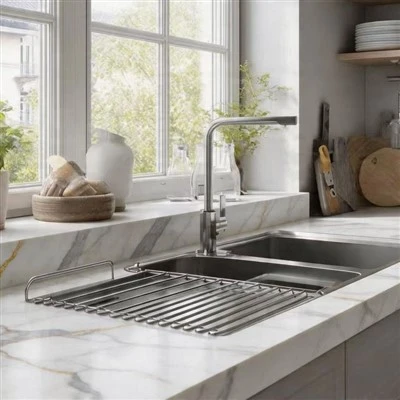
At the end of the day, the price difference between engineered quartz brands comes down to three main things: raw material quality, production oversight, and overhead (marketing, warranties, sales teams). You don’t have to pay premium brand prices to get a great, durable quartz—you just have to find a supplier that prioritizes quality over brand name fluff. If you’re in the market for engineered quartz for your next project, whether it’s a kitchen, bathroom, or commercial space, I’d be happy to walk you through our options, show you sample slabs, and put together a transparent quote that includes everything you need—no hidden fees, no jargon, just straight talk about what your project needs. Hit us up to connect and chat more.
Quartz Stone Finishes References
- National Kitchen & Bath Association. (2022). Engineered Quartz Countertop Material Specification Guide. NKBA Press.
- Quartz Manufacturers Association. (2021). Comparative Analysis of Engineered Quartz Production Standards. QMA Technical Bulletin.
- HomeAdvisor. (2023). Countertop Pricing Report: Quartz vs. Other Materials. HomeAdvisor Industry Insights.
- Caesarstone USA. (2022). 25-Year Product Warranty Terms & Conditions. Caesarstone Customer Support Documentation.
Wuhu Junde New Material Technology Co., Ltd.
As one of the most experienced engineered quartz manufacturers and suppliers in China since 1998, we warmly welcome you to wholesale top-quality engineered quartz made in China here from our factory. If you have any enquiry about cooperation, please feel free to email us.
Address: No.8 Yulin Road, Xinwu Economic Development Zone, Anhui Province, China
E-mail: 1127319898@qq.com
WebSite: https://www.jundequartz.com/
