If you’ve ever ordered custom peptides from a supplier like us, you know there’s nothing more frustrating than waiting weeks for a synthesized batch only to watch it degrade before you can use it for your next experiment, assay, or research project. As a custom peptide supplier who’s been in this space for over a decade, I’ve lost count of the times I’ve gotten a panicked call from a researcher telling me their stored peptide stopped working, or a batch they kept on their shelf yielded inconsistent results. The good news? Most of these issues aren’t random—they’re from poor storage practices. Peptides are fragile, sensitive little molecules, and storing them for long-term use isn’t as simple as tucking them in a drawer or sticking them in a regular fridge. Today, I’m breaking down exactly what works, what doesn’t, and the common mistakes we see all the time that lead to wasted peptides and wasted research dollars. Let’s start with the basics, because if you skip the foundation, nothing else matters. Custom Peptide
First, let’s talk about what custom peptides are, chemically speaking, because their storage needs tie directly to their molecular structure. When we synthesize a custom peptide for you, it’s made up of a chain of amino acids, right? Those amino acids have side chains that can be charged, hydrophobic, or even reactive, and that’s what makes each peptide unique for your research—whether you’re making it for antibody production, cell signaling assays, drug development, or something else. But that same complexity is what makes them delicate. Peptides can undergo degradation through three main pathways: hydrolysis (breaking apart in water), oxidation (reacting with oxygen in the air or solution), and aggregation (clumping together into inactive blobs). How you store them determines how well you can avoid all three of these, especially over months or years.
The first rule of long-term peptide storage is simple: never store your peptide in solution long-term. That’s a mistake I see new researchers make all the time. When you receive a liquid peptide or reconstitute a lyophilized (freeze-dried) peptide into a buffer solution, you’re putting it in an environment where water is present, which is the perfect breeding ground for hydrolysis and bacterial growth. Even if you add a preservative like sodium azide, those additives can interfere with downstream assays, and they don’t stop oxidation. For short-term use (like a few days or weeks), a working aliquot in solution at 4°C is fine, but for anything longer than that, lyophilized powder is the way to go—and storing it correctly is critical.
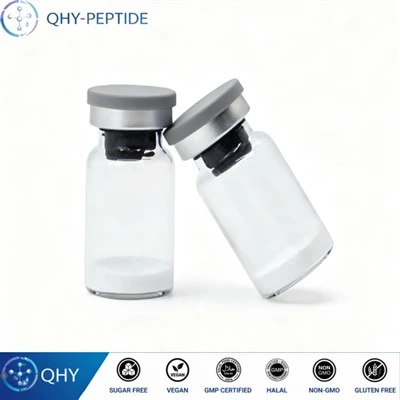
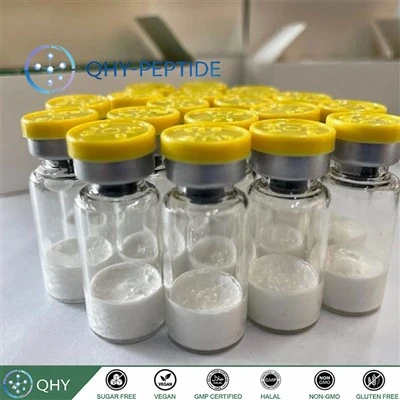
Wait, but what if my peptide isn’t fully soluble? A lot of peptides, especially hydrophobic ones, don’t stay in solution easily, so researchers might be tempted to just leave them as powder and call it a day. But even lyophilized powder has variables that matter. Let’s talk about when you first receive your peptide, because that’s when proper handling starts. When we ship your custom peptide, it’s lyophilized in a sealed, moisture-resistant vial, usually with a cap that has a rubber septum to prevent air from getting in. The first thing you should do when you unpackage it is check the vial for any signs of damage—cracks in the glass, a loose cap, or moisture inside the vial. If moisture is present, that means the peptide started hydrolyzing during shipping, and we should know that, too. We always include a quality control certificate with every batch that lists the purity, synthesis details, and storage recommendations, so save that because it has specific notes tailored to your peptide.
Once you confirm the vial is intact, the next step is to prepare it for long-term storage—this is where so many people go wrong. You might be tempted to open the vial right away to take out a small amount, but humidity in your lab’s air is a big enemy here. Even if your lab is air-conditioned, the moment you remove the cap, moisture can get into the powder. To avoid that, here’s the method we teach all our clients: first, centrifuge the sealed vial at 1,000–2,000 rpm for 30 seconds. Why? Lyophilized peptide powder sits on the sides of the vial and the cap, so centrifuging it pushes all the powder to the bottom, making it easy to work with and ensuring you don’t waste any peptide stuck to the sides. After centrifuging, work as quickly as possible in a low-humidity environment—if your lab has a fume hood, that’s great, or you can work over a container of desiccant to pull moisture out of the air around you. Use a sterile, dry pipette tip or spatula to take only the amount of peptide you need for your next experiment, then immediately recap the vial tightly. If you have a highly hydrophobic peptide, some researchers also add a small amount of desiccant packet (the ones that say “do not eat”) into the vial before storing it—just make sure it doesn’t touch the peptide powder.
Now, the big question: where do you store it? For long-term storage (anything longer than 6 months), your freezer is not all the same, and regular home-style freezers are not the right choice. I’ve seen people store their peptides in the same freezer as frozen leftovers, which has temperature fluctuations every time you open the door. Those fluctuations are terrible for peptides—they cause water vapor to condense inside the vial, leading to hydrolysis. You need a -20°C or -80°C mechanical freezer, not a chest freezer that’s opened frequently for food, and the best practice is to keep your peptide in a secondary airtight container, like a plastic freezer box with a gasket seal, to prevent temperature swings and exposure to frost. Also, never store your peptide near the door of the freezer—put it on a middle shelf where the temperature is consistent. If you have space in an ultralow freezer (-80°C), that’s even better for peptides that are more sensitive, like those with disulfide bonds or oxidized residues; studies show that storage at -80°C can extend the shelf life of many peptides by 2–3 years compared to -20°C.
Wait, what about light? That’s another factor most people forget. Peptides, especially those with aromatic amino acids like tryptophan or tyrosine, are photosensitive. Exposure to UV light (from lab windows, overhead lights, or the freezer light) can cause oxidation and degradation, even at cold temperatures. That’s why we always recommend wrapping your peptide vial in aluminum foil before putting it in the freezer, or storing it in a dark compartment of your freezer. I once had a researcher who kept their peptide on the shelf of their lab fridge near a window, and after only 3 months, the purity dropped from 95% to 78%—all from light exposure. It’s an easy fix, but it’s one that trips up a lot of people.
What if you do need to make aliquots of solution for working use? Let’s say you need to use the peptide over the next month, so you don’t want to thaw the entire -20°C batch every time. That’s fine, but you have to do it correctly, and only make small, single-use aliquots. When you reconstitute your lyophilized peptide, use a sterile, pH-appropriate buffer—usually something like phosphate-buffered saline (PBS) at pH 7.4, but we always include a recommended buffer in the QC certificate for your specific peptide, because some peptides work better in acidic or basic solutions. Avoid making large aliquots that you’ll have to refreeze and thaw multiple times, because each freeze-thaw cycle can cause the peptide to aggregate, especially for larger peptides or hydrophobic ones. If you reconstitute a batch, only take out what you need for one experiment, and discard any leftover solution after that—don’t refreeze it. For working solutions, store them at 4°C for up to a week, or for no more than a month at -20°C, again in single-use aliquots. And always label your aliquots clearly with the peptide name, concentration, and date of preparation—old working solutions can lead to inconsistent assay results that waste more time than a little extra planning.
Now, let’s talk about common mistakes that people make that we see as a custom peptide supplier, because these are the issues that come back to haunt researchers. First, using expired peptides. When we ship a custom peptide, the expiration date we list is for long-term storage under our recommended conditions. If you store it wrong, that expiration date is meaningless. I’ve had clients tell me their peptide “expired” 6 months after receiving it, when in reality they stored it in a regular fridge, not a freezer. Second, not centrifuge the vial before opening. That leads to wasting peptide stuck to the cap and sides, which is especially frustrating when you paid for a custom batch that’s not cheap. Third, not using single-use aliquots. We once had a client who had a working solution of their peptide that they kept at 4°C for 6 months, and when they ran their assay, it didn’t work—turns out the peptide had hydrolyzed in solution, and they had used it for multiple experiments, wasting months of work. Fourth, storing peptides with other reagents that could contaminate them. Freezers are full of enzymes, bacteria, and other reagents that can leach into peptide vials if they’re not sealed properly. That’s why secondary airtight containers are so important. Fifth, not checking the purity of old peptides. If you have a peptide that’s been in storage for a year, it’s a good idea to run a quick HPLC or mass spec test to confirm it’s still pure, before running a critical experiment—better to know now than to waste time later.
Wait, what about peptides that are more sensitive than others? Not all custom peptides are the same. Peptides with cysteine residues (which form disulfide bonds) are much more prone to oxidation, so they need to be stored in the dark, at -80°C, and maybe even with a reducing agent like dithiothreitol (DTT) added to solution aliquots, as long as it doesn’t interfere with downstream assays. Hydrophobic peptides, on the other hand, are more prone to aggregation, so they should be stored as powder (since solution makes them clump together) and kept in a less humid environment. Peptides for in vivo use, like those for animal studies, are even more sensitive because they need to be highly pure, so storage for those should follow the strictest conditions—avoiding temperature fluctuations, light, and moisture at all costs. As your custom peptide supplier, we always note these special considerations on your QC sheet, so make sure you read that carefully, don’t just toss it out.
Let’s also talk about what happens if you do have a degraded peptide. How can you tell? The most common signs are inconsistent assay results, lower activity than expected, or even visible changes in the powder—like clumping, discoloration, or sticking to the vial sides. If you notice that, the first step is to check your storage conditions—did the freezer temperature drop? Was the vial left open? Was it exposed to light? Then, if you have a remaining batch, you can run a purity test to confirm. In some cases, peptides can be re-purified, but that’s not always possible, so better to avoid degradation in the first place.
Now, I know research is busy, and adding extra storage steps to your already long to-do list can feel like a hassle. But trust me, taking 5 minutes at the start to properly store your custom peptide can save you weeks of wasted experiments, hundreds of dollars in wasted reagent, and the frustration of waiting another month for a replacement batch. We’ve seen researchers follow these steps and get 2–3 years of consistent use from their peptide, while others cut corners and have to reorder every 6 months. It’s a simple difference, but it makes a huge impact.
As your custom peptide partner, our job doesn’t end when we ship your batch. We provide detailed storage instructions with every order, we’re here to answer any questions you have about storing a specific peptide, and we can even send you extra desiccant or vials if you need them. If you’re working on a project that requires custom peptides for long-term use, or if you have questions about the best storage practices for your next batch, we’re here to help. Don’t let poor storage ruin your research—reach out to our team today to discuss your custom peptide needs, and we’ll make sure you get a high-quality product that’s ready to use, with guidance to keep it working for you for years to come.
Fitness Peptide References
- Henninot A, Collins JA, James MJ. The current state of peptide drug discovery: back to the future. J Med Chem. 2018;61(4):1382-1414.
- Subramanian A, Laukens K, De Meyer T. Peptide storage: a review of current practices and stability considerations. Peptides. 2020;131:170337.
- Gupta S, Bund R, Bernkop-Schnürch A. Strategies for stabilization of peptide and protein pharmaceuticals. Int J Pharm. 2021;601:120552.
- US Pharmacopeia. General Chapter <1065> Biological Stability Testing of Drug Substances and Products. US Pharmacopeial Convention; 2022.
QHY Bioengineering Co., Ltd.
QHY Bioengineering Co., Ltd. is one of the most professional custom peptide manufacturers and suppliers in China. Please feel free to wholesale advanced custom peptide made in China here from our factory. All customized products are with high quality and competitive price. Contact us for pricelist and free sample.
Address: Luoyang City, Henan Province, P.R.China
E-mail: manager1@qhy-bioengineering.com
WebSite: https://www.qhy-bioengineering.com/
