Hey folks, let’s cut to the chase: if you’re reading this because you need end stop brackets that fit your exact setup, you’re probably tired of stock parts that “kind of work.” I’ve been selling end stop brackets for over a decade, and I get it—no two jobs are the same. Whether you’re a machine builder, a 3D printing hobbyist, or someone maintaining industrial conveyor systems, off-the-shelf brackets often miss the mark. So the big question here is: Can end stop brackets be customized? Spoiler: Yes, they absolutely can. But there’s way more to it than just saying “make it bigger.” End Stop Bracket
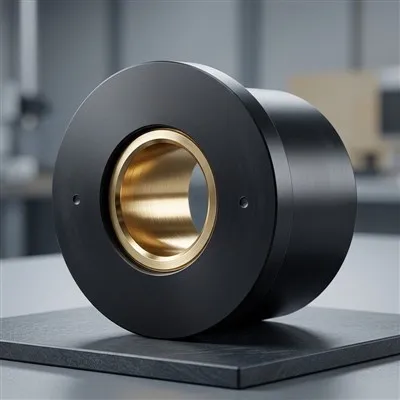
First, let’s back up a little to make sure we’re on the same page. End stop brackets aren’t just random metal pieces you bolt down. They’re the unsung heroes of so many systems—they hold linear bearings in place on 3D printer gantries, stop conveyor parts from sliding off the end of a rail, secure sensors on automated assembly lines, and even keep garage door rollers aligned. Each of these uses has totally different needs. For example, a bracket that holds a 3D printer’s X-axis stop needs to be light, rigid, and not interfere with the print head’s movement. A conveyor end stop bracket has to handle 100+ pounds of load, resist grease and debris, and fit into a tight frame space that stock parts don’t cover.
When someone first asks me about customization, their first thought is usually “just change the length.” But it’s not that simple. Customization for end stop brackets breaks down into three core areas that actually matter: fit, function, and finish. Let’s walk through each because this is where a lot of people (and even some suppliers) get it wrong.
Fit is the non-negotiable starting point. If your bracket doesn’t fit your rail, your machine frame, or the hardware you’re already using, it’s useless. Stock brackets are made for standard rail sizes—like 20mm linear rails, or 1-inch round shafts. But what if you’re using a metric rail that’s not a standard size? Or your frame has mounting holes spaced 45mm apart instead of the standard 50mm? That’s where custom hole patterns come in. I’ve had customers come to me with a printout of their machine’s CAD file, and I can map exactly where the mounting holes need to go so it lines up perfectly with their existing screws—no drilling, no re-tapping, no wasted time. Even the shape of the bracket’s “ears” that wrap around the rail can be custom. A lot of stock brackets have sharp corners, but if you’re working with a tight area, rounded corners or cutouts make all the difference. One of my recent customers was a small robotics shop that needed a bracket for a tiny linear actuator—stock brackets were too bulky, so we cut a half-moon notch in the side to clear a wiring harness, and it fit like a glove.
Then there’s function, which is where customization really shines beyond just “fitting.” Load capacity is a huge one. If your end stop is holding a 500-pound load, a standard aluminum bracket will bend or break over time. For those cases, we can swap in thicker steel, add gussets (those triangular reinforcement pieces) to the back, or even use a composite material that’s stronger than aluminum but lighter than steel. Another function tweak is vibration resistance. If your machine runs 24/7—like a packaging line that never stops—stock brackets might wiggle loose because their mounting holes aren’t slotted. We can add elongated slots so you can adjust the bracket’s position slightly and lock it down tight, eliminating that annoying rattle that drives maintenance techs crazy. Even things like sensor clearance: if you have a proximity sensor that needs to sit right next to the end stop bracket, we can mill a small pocket or a notch in the bracket so the sensor fits without you having to mount it somewhere else. I also work with a lot of 3D printing folks who want their end stop brackets to have a little extra “give” to absorb the shock when the print head hits the end of the rail, so we add a small rubber bumper mount to the bracket—way cheaper than buying separate bumpers and modifying them yourself.
Finish might seem like a minor detail, but it can make or break a project, especially if you’re building a product to sell or working in a harsh environment. Stock brackets usually have a plain mill finish or a cheap powder coat that chips off. For custom jobs, you can pick any finish: powder coat in a specific color for branding, anodized aluminum for corrosion resistance if you’re working in a food processing plant or outdoor equipment, even electropolishing for medical devices that need to be sterile. One of my customers was a solar panel installer who needed end stop brackets for tracking systems that live outside in rain, sun, and snow—we sent them custom brackets with a black epoxy powder coat that’s way more durable than the standard stuff, and they haven’t had a single failure in two years.
Now, I know what you’re thinking: “Custom sounds great, but is it worth the hassle?” Let’s be real—when I first started doing custom brackets, I thought it’d be slow and expensive, but over the years, I’ve streamlined the process so it’s no different from ordering a standard part. The steps are simple: first, tell me what you need the bracket to do—send a sketch, a photo of your existing setup, or even just the measurements you have. I’ll send you a quick quote within a day, no fine print, no hidden fees. Once you approve the quote, I can make a prototype in a week or two, and if it fits, we go into full production. I don’t do minimum order quantities for custom brackets, either—if you need 10 for a prototype build or 10,000 for a full production run, I’ve got you covered. A lot of big suppliers make you order hundreds of custom parts, but I work with small businesses and hobbyists too—no hoops to jump through.
Wait, let’s bust a common myth here: some people say “custom end stop brackets are too expensive.” Yeah, if you’re going to a fancy machine shop that charges $500 an hour for programming, they will be. But my shop uses CNC mills that are programmed for standard parts, so adapting a program for a custom hole pattern or notch takes 10 minutes max. The only time a custom bracket is more expensive than a stock one is if you’re using a material like titanium for a aerospace application or need a really unusual shape. For 90% of the jobs I do, a custom bracket is only $5-$10 more than a comparable stock part, and it saves you hours of modifying stock parts on your end. I’ve had customers tell me they spent 3 hours drilling and tapping a stock bracket because it didn’t fit, and a custom one would’ve taken 10 minutes to install—$10 extra is a no-brainer for that kind of time saved.
Another thing to note: not all suppliers do custom end stop brackets the same way. Some will just route a stock bracket’s edges to make it fit, which is okay for simple cuts, but it can weaken the bracket and mess up the finish. I don’t do that. Every custom bracket I make is designed from scratch, with CAD files, then CNC machined so the walls are the right thickness, the holes are tapped to match your hardware, and every edge is smooth. Even the smallest details—like making sure the bracket fits over a specific rail’s radius—get checked before I cut metal. I’ve had customers send me a stock bracket that they modified themselves, and I can immediately tell it’s been cut with a grinder, so I offer to remake it properly for them. That’s the kind of attention to detail you get when you’re working with a supplier that’s actually been building these brackets for years, not just selling ones they got from a wholesale catalog.
Let’s wrap this up with a real example to make it concrete. Last month, a customer who builds custom conveyor systems for craft breweries hit me up. They needed end stop brackets for a new bottling line that fits between two frames that were already installed—standard 20mm brackets were too wide, and they couldn’t move the frames. He sent me a photo of the tight space, a measurement of 18mm, and said he needed the bracket to hold a sensor that sits 10mm above the rail. We designed a custom bracket: 18mm wide, with a milled pocket for the sensor, mounting holes spaced exactly to match the frame’s existing holes, and a black powder coat that matches the rest of the line. He ordered 50 of them, got them in a week, and told me it took him 10 minutes to install each one instead of an hour per bracket when he tried to modify stock parts. That’s exactly what customization is for—solving a problem that off-the-shelf parts can’t.

So, to circle back to the original question: Can end stop brackets be customized? Absolutely. They’re not one-size-fits-all, and the best part is, you don’t have to settle for a part that almost works. Whether you need a tiny bracket for a 3D printer, a heavy-duty one for a conveyor, or something that fits a weird niche setup, I can help. Don’t waste time drilling, grinding, and modifying stock parts that were never meant for your job. Hit me up to chat through your needs—we can figure out if a custom end stop bracket is the right fit for you, no pressure, no sales pitches.
Valve Core References
- Linear Motion Systems Association. (2022). Custom Component Solutions for Industrial Automation.
- Journal of Manufacturing Processes. (2021). Cost Efficiency of Small-Batch Custom CNC Machining for Mechanical Components.
- Industrial Equipment Maintenance Magazine. (2023). Common Failures in Standard End Stop Brackets and Custom Alternatives.
Tianjin TGE BIAM Graphene Technology Co., Ltd.
Tianjin TGE BIAM Graphene Technology Co., Ltd. is one of the most professional end stop bracket manufacturers and suppliers in China, also supports customized service. Please feel free to buy bulk advanced end stop bracket in stock here from our factory. For quotation, contact us now.
Address: No. 24 Sanjing Road, Dongli Development Zone, Tianjin City, China.
E-mail: sales@tge-tj.com
WebSite: https://www.tge-valve.com/
