If you’ve ever walked through a metal fabrication shop, a stone polishing facility, or a surface treatment lab, you’ve likely seen quartz abrasive media in action—those gritty, angular white or gray particles that tumble alongside workpieces in vibratory finishers, centrifugal barrels, or drag finishing machines. For years, I’ve sat across from shop managers and operations directors in my role as a quartz abrasive media supplier, and one question comes up at least once a week: “Can I reuse this stuff, or do I have to throw it out after one job?” It’s a fair question. Disposal costs add up, downtime from sourcing new media mid-project is a headache, and no one wants to waste a material that’s both effective and made from one of the most abundant minerals on Earth. The short answer is: yes, quartz abrasive media can be reused—but only if you know how to do it right, and only if you account for how it wears, degrades, and interacts with the parts you’re finishing. Quartz Abrasive Media
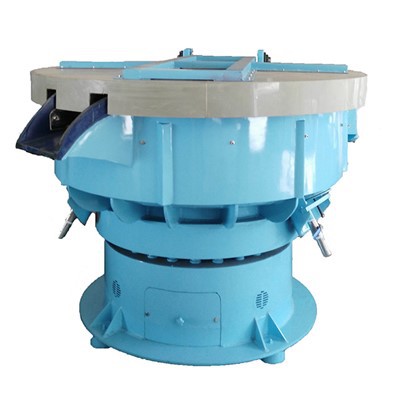
First, let’s get clear on what quartz abrasive media is, because not all media labeled “quartz” is the same. I’ve seen cheap imitations that are crushed rock with inconsistent shape and hardness, and premium grades manufactured to tight standards of grain size uniformity, angularity, and compressive strength. The media I supply is processed from high-purity crystalline quartz, crushed and screened to precise specifications, heat-treated to stabilize its structure, and sorted to eliminate weak grains that break down quickly. That foundational quality makes all the difference when it comes to reusability. Lower-quality media tends to fracture after just a few finishing cycles, turning into fine dust that contaminates parts or clogs machinery. Our product, when cared for properly, can be reused anywhere from 3 to 15 times, depending on the application.
Let’s break down the factors that determine how many times quartz media can be reused, starting with the type of finishing work you’re doing. Two of the most common uses for quartz media are vibratory finishing (for deburring, edge breaking, and surface smoothing) and precision polishing (for achieving a high, uniform sheen on metals, ceramics, or even glass). For heavy deburring jobs on aluminum castings, for example, quartz media takes a beating. Each cycle, the sharp edges that do the grinding wear down slightly, and small amounts of the media fracture into fine particles. In these cases, reuse is limited—maybe 3 to 5 cycles, because after that, the media loses its angularity and can’t remove burrs effectively. On the other end, for light polishing of stainless steel or brass hardware, where you only need to remove fine scratches and achieve a satin or mirror finish, quartz media wears much more slowly. We have clients in the automotive trim industry who reuse our quartz media 10 to 12 times without noticing a drop in finish quality, as long as they maintain it between jobs.
Next is the media management process itself. Even the highest-quality quartz media won’t last if you don’t take basic steps to care for it. The biggest mistake I see new customers make is not screening and cleaning media between cycles. After each use, parts leave behind debris: metal shavings, plastic residue, polishing compounds, even small bits of broken workpieces. If you leave that mixed in with the quartz media, a few bad things happen. First, the debris can act as a lubricant or a buffer, preventing the quartz from contacting the parts and reducing its effectiveness. Second, hard metal shavings can scratch new parts during the next cycle, ruining work and contaminating the media further. Third, fine debris can accelerate the wear of the quartz grains, as they act like tiny abrasives themselves, wearing down the media’s edges faster. That’s why we always recommend investing in a simple media separator—a vibrating screen or a centrifugal separator that can sift out debris and separate usable media from fractured, undersized grains. We sell these separators alongside our media for a reason; I’ve had customers try to skip them, only to come back a month later asking why their media is breaking down so fast.
Another key factor is the size and shape of the quartz media. Angular, irregularly shaped grains (the kind we produce) perform better for reuse than rounded beads or spheres. Rounded media rolls instead of grinding, so it wears more uniformly, but it also loses its ability to remove material much faster than angular quartz. We once had a client who switched from a competitor’s round ceramic media to our angular quartz, and his reuse count jumped from 4 cycles to 8. The angular shape means each grain has multiple sharp edges that can continue cutting even after some edges wear down, instead of just wearing down evenly into a dull sphere. The downside of angular media is that it’s more abrasive to machinery liners, so if you have old machinery with soft rubber liners, you’ll want to check for liner wear after each cycle, as worn liner material can contaminate your media.
There are limits to how often you can reuse quartz media, of course, and it’s important to know when to retire it. The two main signs that it’s time to replace media instead of reusing it are loss of cutting ability and contamination. Cutting ability is easy to test: during a finishing cycle, if parts come out with visible burrs or scratches that they didn’t in previous cycles with fresh media, that’s a sign the quartz is too worn. You can also test media hardness with a simple Mohs scale kit—quartz has a Mohs hardness of 7, and after repeated cycles of impact and friction, the grains can develop micro-cracks that lower their effective hardness. If the media tests below a Mohs 6, it’s no longer effective. Contamination is another reason to retire media. If after screening, you find a large amount of foreign material—like lead shavings from plumbing parts, or chemical residue from polishing compounds that can’t be rinsed out—it’s better to discard the media than risk ruining future parts. I had a client a few years back who tried to reuse media that had been used on parts coated with a toxic solvent residue, and when he reused it on food-grade stainless steel utensils, he ended up with a batch of parts that failed quality testing. It cost him thousands in scrap, so now he runs a chemical test on his media every few cycles to make sure it’s safe for reuse.
One of the biggest myths I hear is that reusing quartz media will save you money, and while that’s true, only if you do it right. Let’s do the math: a 50-pound bag of our premium quartz media costs around $150, right now. If you use it once, that’s $3 per pound of media used. If you reuse it 8 times, that’s $0.375 per pound per use—a huge difference in operating costs. But the savings only add up if you factor in the screening equipment, the labor to clean and maintain the media, and the cost of disposing of the small amount of media you retire each cycle. If you skip the screening step, you’ll end up with more scrap parts, higher energy costs from running finishers longer to compensate for dull media, and possibly higher disposal costs from throwing away more media than you need to. We’ve had customers who spent $500 on a media separator, and recouped that cost in less than three months in reduced media and scrap expenses.
Another point to consider is environmental impact. For manufacturers looking to reduce their carbon footprint, reusing abrasive media is a big win. Quartz is a naturally occurring mineral, but mining and processing it has an environmental cost—every new bag of media requires energy for crushing, screening, and heat treatment, and contributes to waste when old media is sent to landfills. By reusing media 5, 10, or even 12 times, you’re reducing the number of new bags you need to buy, and cutting down on the volume of waste your facility produces. We recently worked with a medical device manufacturer who set a goal to reduce their abrasive waste by 75% in a year; by switching to our quartz media and implementing a strict reuse and screening process, they hit that goal in 8 months, and saved over $20,000 in material costs in the process.
Of course, there are cases where reusing quartz media isn’t the best idea. If you’re working on high-precision parts, like aerospace turbine blades, that require a consistent, uniform finish with zero defects, you might not want to risk reusing media. Even small amounts of worn or contaminated media can lead to scratches that result in parts being rejected. In those cases, it’s better to use fresh media for every job, or only reuse media that’s been certified for precision work. Also, if you’re finishing parts that are particularly delicate, like thin-walled aluminum parts that can deform under heavy impact, reusing media might not be ideal—even durable quartz can damage fragile parts if it’s too worn or too abrasive. In those cases, switching to a smaller grain size of quartz media, or a different type of media like plastic, might be a better fit, depending on your needs.
So, putting it all together: Can quartz abrasive media be reused? Yes, absolutely—but it’s not a one-size-fits-all answer. The key is to start with high-quality, angular quartz media (the kind we supply, processed for consistency and hardness), implement a regular screening and cleaning process, test media regularly for wear and contamination, and know when to retire it instead of forcing more cycles. I’ve seen shops go from throwing away media after one use to reusing it 10 times, cutting their material costs drastically and reducing waste. The shops that struggle with media reuse usually do so because they skip the maintenance step, or buy cheap media that breaks down after a few cycles.
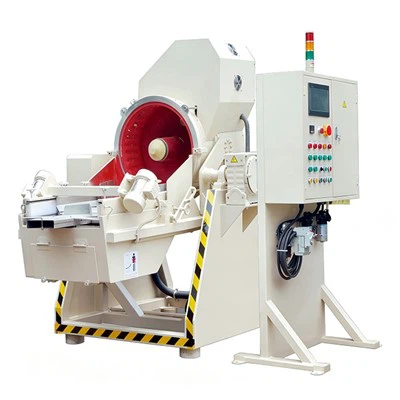
Centrifugal Barrel Finishing Machine If you’re currently using quartz media and wondering if you’re getting the most out of it, or if you’re looking to switch to a more cost-effective, reusable abrasive, I’m here to help. Every facility has unique finishing needs—different part types, machinery, throughput requirements, and quality standards—and I can walk you through how to adjust your media process to get the maximum number of reuse cycles, without sacrificing part quality or productivity. Whether you’re running a small machine shop with one vibratory finisher or a large production facility with dozens of lines, we can work together to find the right media grade and maintenance routine for your operation. Reach out to our team to discuss your specific needs, and we can provide a custom solution tailored to your business.
References
- Timm, W. (2018). Vibratory Finishing: Principles and Applications. SME Press.
- Kar, A. (2020). "Abrasive Media Wear and Reuse in Surface Finishing Operations". Journal of Manufacturing Processes, Vol. 56, pp. 1212-1220.
- National Stone, Sand & Gravel Association. (2022). Quartz Properties and Industrial Applications. NSSGA Technical Bulletin.
- Ross, J. (2019). "Cost Optimization of Abrasive Media Reuse for Metal Fabrication Facilities". Industrial Maintenance & Plant Operation, Vol. 37, No. 4, pp. 28-32.
Dongguan Xindingsheng Intelligent Grinding Technology Co., Ltd.
Dongguan Xindingsheng Intelligent Grinding Technology Co., Ltd. is one of the most reliable quartz abrasive media manufacturers and suppliers in China, also supports customized service. Please feel free to wholesale bulk high quality quartz abrasive media in stock here from our factory. Contact us for pricelist.
Address: Room 101, Building 1, No. 73 Dahuangmei Road, Dalingshan Town, Dongguan City, Guangdong Province, China
E-mail: cndskj@126.com
WebSite: https://www.xdsfinishing.com/
