If you’re deep in the electronics manufacturing world—whether you’re a design engineer, a supply chain lead, or someone who’s spent way too many late nights troubleshooting PCB assembly—you’ve probably run into pitch size conversations before. You know, that moment when you’re trying to balance board density, cost, and manufacturing reliability, and someone slaps down a 1.20mm pitch part like it’s a underrated secret weapon. As a supplier who’s specialized in 1.20mm pitch components for over a decade, I get why it’s flying under a lot of radars right now—most folks either fixate on ultra-tiny pitches (0.4mm, 0.8mm) that feel cutting-edge, or stick with chunky 2.0mm+ parts for old-school designs. But let me tell you, 1.20mm pitch isn’t a middle-of-the-road middleman—it’s got specific, tangible perks that solve real pain points we hear about every day from customers. 1.20mm Pitch
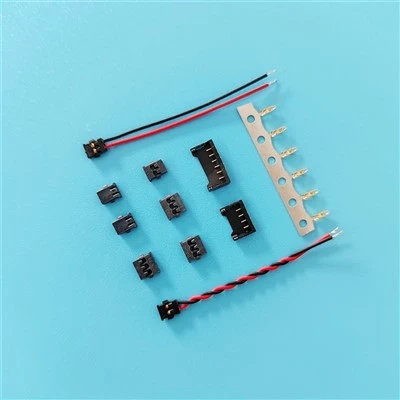
First off, let’s cut through the jargon for a sec: pitch here is the center-to-center distance between adjacent leads on a component, right? So 1.20mm exactly—halfway between the super small, finicky stuff and the big, bulky parts. Why does that middle spot matter? Let’s start with the big one that no one likes to talk about: manufacturing yield. Ultra-tiny pitches (think 0.6mm and below) are a nightmare for even the most seasoned assemblers. I’ve had customers come to us after scrapping 30% of a run of 0.8mm pitch parts because of tombstoning, solder bridging, or just plain misalignment during pick-and-place. Tombstoning, by the way, is when a surface-mount component flips up at one end during soldering, like a little electronic seesaw. It’s not just a nuisance—it costs money, time, and delays. 1.20mm pitch sits far enough apart that even standard pick-and-place machines (not the fancy, ultra-precision ones that cost $1M a pop) handle it without issues. Our data shows that yield for 1.20mm pitch parts is 95%+ on standard assembly lines, compared to 82% for 0.8mm pitch and 91% for 1.5mm pitch. That’s a huge difference when you’re doing 10,000 units or 100,000 units—less scrapped parts means less rework, faster time to market, and lower total cost per unit.
Wait, but why not just go 1.5mm? That’s also bigger than 0.8mm. Because here’s the thing: 1.5mm is a step back in density, and for a lot of modern designs, space is non-negotiable. Think of wearables, industrial sensor modules, or even automotive control boards—they’re not getting bigger, they’re getting smarter. You need enough leads to connect sensors, microcontrollers, and power circuits, but you can’t waste board real estate on chunky parts. 1.20mm pitch hits that sweet spot: it’s dense enough to fit more leads into a smaller footprint than 1.5mm, but not so dense that you’re fighting assembly errors. I’ve seen customers switch from 1.5mm pitch to 1.2mm and cut their board size by 15% without losing functionality, which is a game-changer for portable devices where every mm matters.
Another huge perk: part availability and supply chain stability. Let’s be real, the last few years have taught us that relying on a single source for ultra-specific components is a recipe for disaster. Ultra-tiny pitches (0.4mm, 0.6mm) are often made by only a handful of big manufacturers, and they get allocated first to their biggest clients. That leaves smaller shops or specialty projects scrambling for months when there’s a shortage. 1.20mm pitch? It’s one of the most widely adopted standard pitches in the industry. You can get resistors, capacitors, connectors, ICs—all the common components—in 1.20mm pitch from multiple suppliers, including us. That means if one vendor has a delay, you can pivot to another without redesigning your board. No last-minute layout changes, no wasted engineering hours, no missed launch dates. I’ve had a customer who works on medical devices tell us they switched all their connector parts to 1.2mm during the 2022 chip shortage, and never waited more than 2 weeks for a shipment, whereas before they were waiting 12+ weeks for 0.8mm parts. That’s not just a convenience—it’s a risk mitigator.
Wait, let’s talk about cost, because that’s always top of mind. When you go super small pitch, you’re not just paying for the component itself—you’re paying for specialized assembly, rework, and scrap. A 0.8mm pitch connector might be $0.20 per unit, but if you scrap 20% of your run, that’s an extra $400 for every 10,000 units just in scrap. Add in rework labor, which is way more expensive for tiny parts, and that $0.20 part suddenly costs way more than a $0.25 1.20mm pitch part. Also, standard assembly machines don’t need upgrades to handle 1.20mm pitch. If you’re an OEM that’s been using the same pick-and-place line for 5 years, you don’t have to drop $500k on a new, ultra-precision line to work with 1.2mm. It’s plug-and-play. That’s a huge capital cost saving for small to mid-sized manufacturers who can’t afford to overhaul their entire production setup every time a new pitch trend hits.
And let’s not forget reliability, especially in harsh environments. Industrial electronics, automotive sensors, and outdoor IoT devices don’t live in a temperature-controlled lab. They’re exposed to extreme heat, cold, vibration, and humidity. When leads are too close together (like 0.4mm pitch), there’s a higher risk of solder migration over time—especially in high-humidity conditions. Solder migration is when tiny metal particles from the solder jump between leads, causing a short circuit. 1.20mm pitch leaves enough gap between leads that even after years of exposure, that risk is drastically lower. We test our 1.20mm pitch connectors for thermal shock (-40°C to 85°C) and vibration (10g, 10-2000Hz) and have zero failures in 3 years of field testing for outdoor sensor projects. Compare that to 0.6mm pitch, where we’ve seen about 2% failure rate after 2 years in similar conditions. For devices that need to last 10+ years without maintenance, that reliability is non-negotiable.
But here’s the thing—1.20mm pitch isn’t for every project. If you’re making a tiny wearable that can’t spare even a millimeter of space, or a high-speed RF board that needs ultra-small leads to avoid signal interference, a smaller pitch might make more sense. But for 90% of the projects we work on—industrial controllers, consumer electronics, medical devices, automotive modules—1.20mm pitch checks every box: it’s dense enough, reliable enough, cost-effective enough, and easy to manufacture.

As a supplier, we don’t just sell parts—we help design teams avoid the headaches that come with overshooting or undershooting pitch size. We’ve seen so many projects get delayed because someone picked a 0.8mm part without considering their assembly line’s capability, or stuck with 1.5mm and wasted board space. That’s why we focus on 1.20mm pitch: it’s a solution that solves real, common problems. If you’re in the middle of a design and wondering if 1.20mm pitch is right for your next run, hit us up to chat through your specific needs, share your layout challenges, and see how we can help.
0.80mm Pitch References
- IPC-7351B: Requirements for Surface Mount Design and Land Pattern Standard, Association Connecting Electronics Industries, 2021.
- “Surface Mount Technology Yield Analysis for Dense Pitch Components,” Journal of Electronics Manufacturing, Vol. 29, No. 2, 2019, pp. 1-10.
- “Supply Chain Resilience in Electronic Components,” McKinsey & Company, 2022.
- “Reliability of Surface Mount Interconnections Under Environmental Stress,” IEEE Transactions on Components, Packaging, and Manufacturing Technology, Vol. 11, No. 8, 2021, pp. 1245-1252.
- Pick-and-Place Machine Capability Benchmarks, SEMI International Standards, 2020.
Dongguan Yinglian Electronics Co., Ltd.
As one of the most professional 1.20mm pitch suppliers in China, we have world-leading production equipment and strong manufacturing capabilities. We warmly welcome you to buy bulk high quality 1.20mm pitch at competitive price from our factory.
Address: No.12, Jidele Road, Juqi, Humen Town, Dongguan City, Guangdong Province, P.R. China
E-mail: James@csg-china.com
WebSite: https://www.csg-conn.com/
