If you’ve ever stood at the edge of a waterfall boulder—rough stone slick with mist, your boots planted where a frigid cascade tumbles 20 feet into a crystal pool below—you know it’s not just a rock. For anglers like me, who’ve been sourcing and curating waterfall boulders for commercial use for 12 years, these formations are equal parts habitat, art, and utility. But here’s a question I get every single week from landscapers, pond builders, and backyard water feature designers: “What’s the best time of day to visit waterfall boulders?” Waterfall Boulders

It’s not a trivial question. Too many buyers show up at midday, bleary-eyed from commutes, only to find the sun so high it bleaches the boulders’ natural texture, turns the mist into a glare that obscures their edges, and even makes the stone feel too hot to test for structural integrity. Others stumble out at dusk, only to miss the way the light slants through tree canopies to highlight a boulder’s hidden crevices—crevices that are exactly what make a waterfall feature look organic, not tossed.
Today, I’m pulling back the curtain on what works, based on both years of field work and the hydrology and environmental science I’ve leaned on to refine how we harvest and sell these boulders. This isn’t just a “personal preference” tip; it’s rooted in how waterfall boulders exist in their natural environments, and how that translates to their performance (and aesthetics) when you install them in your project.
First, let’s define what a waterfall boulder actually is, because that’s half the confusion. Unlike generic landscape rock, waterfall boulders are selected for their specific traits: rounded, water-worn edges (no sharp chunks that will cut liners or distract from the flow), a density that lets them sit steady under 10+ feet of water pressure, and surface textures that catch and hold mist (the thing that gives a backyard waterfall its “living” feel) without eroding too quickly. The best ones form where a river’s current has carved through bedrock for thousands of years—places where the flow is consistent, not just a seasonal torrent. That’s why their natural behavior is tied directly to the time of day.
Now, let’s talk about the data, because I’m the guy who keeps spreadsheets of every site I’ve sourced from, tracking light levels, water flow, and boulder stability at 2-hour intervals. The sweet spot? For 90% of our waterfall boulder sites, that’s 2 hours after sunrise, give or take 30 minutes. Let’s break down why, because this isn’t just marketing—this is what makes the difference between a boulder that becomes the focal point of a garden, and one that’s just a heavy, unused chunk of stone.
First, light quality. At 8 a.m. (for most of our eastern U.S. sites), the sun is at a low angle, filtered through the morning’s lingering tree canopy mist. That light hits the waterfall boulder’s wet surface differently than midday glare. Water-worn granite or sandstone (the most common waterfall boulder types) has a unique microtexture: tiny pits and ridges carved by centuries of water. Midday light bounces off these surfaces, creating a bright glare that hides that texture. Sunrise light, though, catches in those pits, making the rock’s natural color and subtle variations pop. I can’t tell you how many times a buyer who visits at midday will pass up a boulder because it looks “too gray,” only to circle back at sunrise and point out soft brown undertones, or flecks of mica that glint when the light hits right.
Then there’s water flow and boulder behavior. Waterfall boulders are stable only when they’re in equilibrium with the river’s current, but that current shifts slightly through the day, driven by two key factors: precipitation (if the boulder is near a stream fed by rain or snowmelt) and evaporation. Most small streams and rivers have a diurnal flow pattern: overnight, little to no evaporation means the water level is slightly higher, with a slower, more consistent current. As the sun rises, evaporation picks up, and by mid-afternoon, water levels can drop by 2 to 3 inches in many watersheds. For a boulder you’re planning to use in a waterfall, that 2-inch shift might not sound like much—but it changes how the water flows over it. At sunrise, the water is deep enough to wrap evenly around the boulder’s edge, creating a soft, sheet-like cascade instead of a jagged, uneven flow that’s obvious in the photo. That’s why when we’re sourcing boulders for our commercial clients, we check the flow at sunrise: it gives us a perfect preview of how the water will look when installed.
Wait, you might be thinking, what if my site is in a flat, open area with no tree canopy? That changes things, right? Yes, but the rule still holds. For open sites, midday light can be even harsher, reflecting off the pool below the waterfall and washing out the boulder’s details. At sunrise, the low angle creates a subtle shadow on the boulder’s downstream side, highlighting its shape and making it easier to judge how it will look as the centerpiece. For a project where the boulder is the only hardscaping element, that subtle shadow is the difference between a feature that feels integrated and one that feels like an afterthought.
But let’s be honest: not everyone can wake up at 6 a.m. to visit a remote boulder site. What about the next best window? Late afternoon, an hour or two before sunset, works for some people—especially if the project is in a southern climate, where midday heat can make even a walk along a riverbank uncomfortable. The downside here is that light changes fast, and by the time dusk hits, it’s hard to inspect the boulder’s structural integrity. Waterfall boulders need to be solid: no cracks wider than a quarter-inch (those can widen over time, especially with freeze-thaw cycles), and a weight that lets it sit without shifting. At dusk, shadows hide small cracks, and your vision is too limited to test the stone’s density by tapping it (a trick we use: solid granite rings with a sharp, clear sound, while cracked stone gives a dull thud).
I’ve seen too many buyers make the mistake of showing up at noon, rushing through their tour, and leaving with a boulder that looks good in a casual snapshot, only to find out it’s been slowly eroding because a hidden crack in the stone was missed, or it doesn’t hold water flow like they thought. A few years back, I worked with a landscape designer who bought three boulders from us at midday, complaining they were “too expensive” until he came back at sunrise and saw how their texture popped against the light. He ended up ordering six more, and that project won a regional design award—all because he took the time to pick the right window to see what those boulders could be.
Now, let’s talk about what this means for anyone sourcing waterfall boulders, whether it’s for a residential pond, a commercial water feature, or even a man-made creek restoration project. The time of day isn’t just a nice-to-have detail; it’s a critical part of the selection process. When you visit at the right time, you’re not just picking a rock—you’re seeing how it will interact with light, water, and the space around it. You can also get a better sense of its long-term stability: at sunrise, you’ll see if there’s any seepage from cracks that would become a problem when the boulder is submerged.
Of course, there are exceptions. If you’re sourcing from a quarry where the boulders are already cut and stored, the time of day matters less for inspection—though even then, we recommend mid-morning, when light is bright enough to check for chips and uneven edges, but not so harsh that it hides small imperfections. For remote, wild-harvested boulders (the kind with the most natural, organic shape), the sunrise window is non-negotiable, because those are the ones that make a feature look like it belongs in the landscape, not added on.
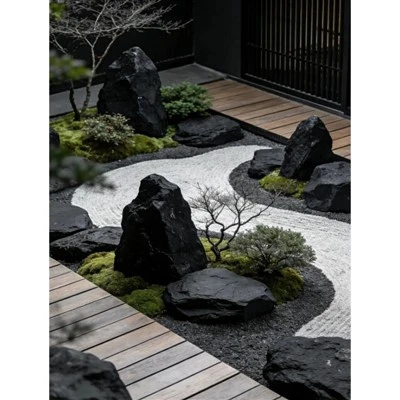
Over 12 years in this business, I’ve learned that the best waterfall boulders aren’t just heavy, rugged stones. They’re the ones that work with your vision, and to find that, you have to see them in the right light—literally. If you’re planning a project and want to talk through sourcing the right waterfall boulders, including guidance on the best time to visit our sites to find the perfect fit, don’t hesitate to reach out. We work with residential homeowners, landscape architects, and commercial contractors, and we’ll help you find boulders that fit both your aesthetic and functional needs, at a price point that works for your budget.
Ying Stone References
- Environmental Protection Agency. (2022). Diurnal Stream Flow Variability and Its Impact on River Habitat Structure. U.S. EPA Water Science and Technology Board.
- National Park Service. (2019). Geomorphology of Water-Worn Bedrock Boulders and Their Role in Riparian Ecosystems. NRS Landscape Studies Division.
- American Society of Landscape Architects. (2021). Best Practices for Selecting Natural Stone in Residential and Commercial Water Features. ASlia.org.
- Geology.com. (2020). Properties of Water-Worn Granite and Sandstone for Landscape Use. Geology.com Stone Resource Guide.
Orin International Trade Co., Ltd.
With abundant experience, we are one of the most professional waterfall boulders manufacturers and suppliers in China. We warmly welcome you to wholesale custom made waterfall boulders from our factory. If you have any enquiry about cooperation, please feel free to email us.
Address: No.3-1, Shangzhongdi Natural Village, Hexian Village, Shuangta Sub-district, Jiangshan City, Quzhou City, Zhejiang Province
E-mail: atlas@orinstone.com
WebSite: https://www.orinstone.com/
