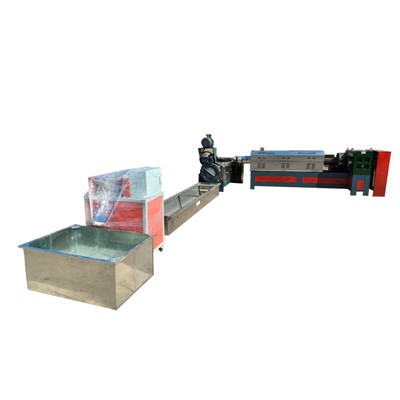
If you’ve ever worked in the plastic recycling industry, you know that plastic pelletizing isn’t just about chopping melted plastic into uniform bits—it’s about turning messy, post-consumer or post-industrial waste into a material that’s consistent, reliable, and market-ready. For years, a common question I get from processors is, “Can I run both PP and PE together through my plastic pelletizing equipment without issues?” As a supplier who’s spent 12 years building and modifying pelletizing lines for small-scale recyclers and large manufacturing plants, I’ve seen this play out hundreds of times—both flawlessly and catastrophically. The short answer? Yes, you can process PP and PE in the same line, but only if you understand their key differences, adjust your equipment settings properly, and avoid the most common mistakes that derail even well-designed systems. Plastic Pelletizing Equipment
First, let’s break down what PP and PE actually are, because their fundamental properties are the root of almost every challenge when mixing them. Polypropylene (PP) is a stiffer, higher-melting-point polymer, with a typical melting temperature around 160–170°C (320–338°F). It’s rigid, resistant to fatigue, and holds its shape well—think yogurt cups, bottle caps, or food containers. Polyethylene (PE) comes in two main types, HDPE and LDPE, with slightly different melting points: HDPE melts at 120–130°C (248–266°F), LDPE at 105–115°C (221–239°F). PE is more flexible, has lower tensile strength, and tends to stretch when melted, which can cause issues during pellet formation. The biggest problem when mixing these two is their melt flow rates (MFR) and viscosity. PP has a higher MFR (meaning it flows more easily when melted) and lower viscosity than PE, especially HDPE. When you force these two through a single extruder barrel, the mismatch can lead to uneven mixing, inconsistent pellet size, or even shear buildup that damages the equipment.
I remember a customer who reached out to me two years ago, panicking because his pelletizing line was spitting out lumpy, brittle pellets instead of uniform ones. He’d tried processing a batch of mixed milk jugs (HDPE) and takeout containers (PP) without adjusting his settings, and within 20 minutes, his die face cutter was clogged, and his extruder motor was overheating. When I walked him through his process, it was clear he’d skipped the critical first step of adjusting his temperature profile. Most standard pelletizing lines are either calibrated for PP or PE, not both. If you run a line set for PE (lower melting temperatures) and feed in raw PP, the PP won’t fully melt, leading to unprocessed chunks that clog the screen changer or the die holes. Conversely, if you run a line set for PP (higher temperatures) and feed in PE, the PE will overheat, break down, and release fumes that corrode internal components.
So, how do you make it work? Let’s start with the extruder, the heart of any pelletizing system. The extruder’s screw design and barrel temperature zones are non-negotiable. For PP/PE blends, you need a middle-of-the-road temperature profile that melts both polymers evenly without causing degradation. Most processors set their feed zone (where raw plastic enters) to 130–140°C, transition zone to 150–160°C, and metering zone (right before the die) to 160–170°C. This balances the lower melting point of PE (which will soften at the feed zone) and the higher melting point of PP (which will melt fully in the transition and metering zones). The screw is just as important: a general-purpose screw with moderate mixing elements works best here, instead of a screw designed exclusively for PP (which has deeper channels for better shear) or PE (which has shallower channels to handle low-viscosity melt). I always recommend to customers that if you plan to run frequent PP/PE blends, invest in a modular screw that lets you swap mixing segments depending on the ratio of PP to PE you’re processing. If you’re running 70% PE and 30% PP, you can add more shear elements to help the PP melt evenly; if it’s 70% PP and 30% PE, you can use a gentler screw to avoid overheating the PE.
Next, the screen changer and die plate. These two components are where most clogs happen when blending PP and PE. The screen changer is what removes contaminants (dirt, labels, metal bits) from the molten plastic, and if the blend has uneven viscosity, contaminants can get trapped in the screen faster. For PP/PE mixes, I recommend using a screen stack with a finer mesh (80–120 mesh) than you would for single polymer runs, but not so fine that it causes excessive backpressure. Backpressure is a big deal—too much backpressure in the extruder can cause the melt to degrade, especially the more heat-sensitive PE. The die plate, which has the tiny holes that the molten plastic is forced through, needs to have uniform hole size and spacing. If holes are slightly different, the more fluid PP will come through faster than the PE, leading to uneven strands that the pelletizer can’t cut properly. I always tell customers to inspect their die plates every time they switch from a single polymer to a blend, and to polish the holes regularly to prevent plastic buildup, which can throw off flow.
Then there’s the pelletizer itself. There are two main types of pelletizers: die face cutters (the most common for post-consumer plastic) and strand cutters. For PP/PE blends, die face cutters are more reliable, because they cut pellets directly from strands emerging from the die, rather than pulling strands through a water bath first. When you use a strand cutter, the PE strands (being more flexible) can stretch and break before they reach the cutter, leading to uneven strand feeding. Die face cutters submerge the die in a water bath immediately, which cools the strands quickly and keeps them rigid enough to cut into uniform pellets. That said, the water temperature in the bath is critical. If the water is too cold, the pellets cool too fast, leading to brittleness; if it’s too warm, they stick together. For PP/PE blends, aim for a water temperature between 40–50°C (104–122°F). Some customers try to add a small amount of anti-static agent to the water, which prevents pellets from sticking, but that’s only necessary if you’re processing very high PE ratios.
Now, let’s talk about ratio limitations. Even with all the right settings, you can’t run a 50/50 mix of PP and PE and expect perfect pellets every time. The key is understanding that PP and PE are chemically incompatible, meaning they don’t mix at a molecular level—they form a heterogeneous blend, like oil and water. When the ratio of either polymer gets too high, the blend’s properties become inconsistent. Most processors find that ratios between 30–70% of one polymer work best: 30% PP and 70% PE, or 70% PP and 30% PE. If you go beyond that, you’ll start seeing phase separation: small clumps of PP in a PE matrix, or vice versa, which lead to pellets with uneven strength, color, or melt quality. That’s not to say it’s impossible—some specialty additives can help compatibilize PP and PE, but for most small and medium recyclers, adding compatibilizers increases costs significantly, and it’s not usually cost-effective for general-purpose recycling. I always advise customers to test their blend ratios first with a small batch, maybe 100 kg, before running a full production run, to see if the pellets meet their end-use requirements. If they’re making pellets for plastic lumber, a slightly inconsistent blend is fine, but if they’re making pellets for injection molding food containers, the ratio needs to be much tighter, and compatibilizers might be necessary.
Another common mistake I see is not pre-sorting the feedstock. Even if you’re running a blend, if your input has large quantities of PVC (polyvinyl chloride), that will cause catastrophic issues, regardless of PP/PE ratio. PVC releases hydrochloric acid when melted, which corrodes extruder barrels and die plates, and it’s also incompatible with both PP and PE, leading to black specks and degraded pellets. I can’t stress this enough: sorting your feedstock is non-negotiable. Use a combination of manual sorting, float-sink testing (PP floats in water, PE sinks), and near-infrared (NIR) sorting to separate PP, PE, PVC, and other polymers before they enter the pelletizing line. I had one customer who skipped this step, thinking his line could handle it, and within three months, he had to replace his entire extruder barrel and two die plates, which cost him more than a new set of sorting equipment.
Now, let’s talk about maintenance and long-term performance. When you run PP and PE blends consistently, your equipment will wear a little faster than it would for single polymers. The combination of different viscosities means there’s more shear on the screw and barrel, and the higher melting temperatures of PP can cause more thermal expansion, which puts stress on the die plate. To keep your line running smoothly, you need to do regular checks: inspect the screw for wear every 6–12 months, replace die plates and screen changers every time you switch blend ratios, and flush the extruder with a clean polymer (like virgin HDPE) for 30 minutes when you’re done with a production run. Flushing is critical—if you leave melted PP/PE blend in the barrel, it will solidify and become brittle, and next time you run a different polymer, it can break loose and clog the line. I always tell customers that routine maintenance is 80% of the battle, especially when working with blended polymers.
Let’s circle back to that customer I mentioned earlier. After his initial disaster, he adjusted his temperature profile to 155°C in the metering zone, swapped his general-purpose screw for a modular one with mild mixing elements, and pre-sorted his feedstock to remove 99% of PVC. He started with a 30% PP, 70% HDPE ratio, and within a week, he was producing uniform pellets that his buyer was happy with. Six months later, he expanded his line to handle 50/50 blends, added a compatibilizer additive for that batch, and now sells those pellets for plastic pallets, which require higher strength than plastic lumber. The lesson here is that processing PP and PE together isn’t just about equipment—it’s about process control. You can have the latest pelletizing line, but if you don’t adjust your settings, sort your feedstock, or test your blends, you’ll end up with the same issues as that first customer.
If you’re still on the fence about whether your current line can handle PP and PE blends, let me be clear: most modern plastic pelletizing equipment, especially those with modular screws and adjustable temperature profiles, can handle the job, as long as you’re willing to make small adjustments to your process. The biggest advantage of blending these two polymers is cost—you don’t have to build separate lines for PP and PE, which saves on capital costs and reduces downtime from switching lines. For small recyclers, that means you can process mixed post-consumer waste that would otherwise be sent to a landfill, turning it into a valuable product. For larger manufacturers, it means you can source lower-cost feedstock from post-industrial waste, without sacrificing pellet quality.
Now, let’s address the most common myths about this topic. Some people will tell you that you can never run PP and PE in the same line, because they’re incompatible. That’s not true—we’ve been doing it for decades, as long as you adjust the settings. Others will say that you need a huge, industrial-scale line to handle blends. Again, not true—we’ve installed small, 500 kg per hour lines for small recyclers that run PP/PE blends without issues. The key is matching the equipment to your volume and needs, not the other way around.
At the end of the day, plastic pelletizing is all about adaptability. The waste plastic stream you’re processing isn’t uniform, and your equipment needs to adapt to that. If you’re ready to test running PP and PE blends on your current line, or you’re looking to upgrade your equipment to handle mixed streams, don’t hesitate to reach out. We’ve helped hundreds of processors adjust their lines to run PP, PE, and other polymer blends efficiently, and we can help you too. Whether you need a custom screw modification, temperature calibration guidance, or a full line upgrade, we have the expertise to get you up and running. Don’t let the fear of blending stop you from maximizing your recycling output—let’s turn your mixed plastic waste into high-quality pellets that drive your business forward.
Plastic Drying Equipment References
- Plastics Technology. (2022). "Blending PP and PE for Circular Economy Applications." Society of the Plastics Industry.
- Davis, J. R. (2019). Handbook of Thermoplastics Processing. Hanser Publications.
- European Plastics Recycling Council. (2021). "Guidelines for Processing Mixed PP/PE Post-Consumer Waste." EPRC Technical Report.
- Zhang, L., et al. (2020). "Compatibilization of PP/PE Blends for Improved Recycled Pellet Quality." Journal of Applied Polymer Science.
Laizhou Yuening Machinery Co., Ltd.
As one of the most reliable plastic pelletizing equipment manufacturers in China, we warmly welcome you to buy cheap plastic pelletizing equipment made in China here from our factory. All customized machines are with high quality and low price. For pricelist, contact us now.
Address: Yuanjia Village, Luwang, Shahe Town, Laizhou City, Yantai City, Shandong Province
E-mail: yueningjixie@163.com
WebSite: https://www.ynplasticmachinery.com/
