Hey there! As a supplier of Partial Discharge Testers, I often get asked about all sorts of technical details, and one question that pops up quite a bit is, "What is the temperature coefficient of a Partial Discharge Tester?" So, I thought I’d take a few minutes to break it down for you in a way that’s easy to understand. Partial Discharge Tester
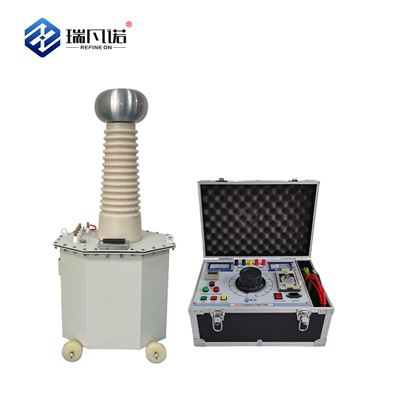
First off, let’s talk about what partial discharge is. In simple terms, partial discharge is a localized electrical discharge that occurs within an insulation system. It’s like a little spark that happens inside the insulation, and over time, it can cause damage to the insulation and lead to equipment failure. That’s where partial discharge testers come in. These nifty devices are designed to detect and measure partial discharge activity, helping us to identify potential problems before they turn into big headaches.
Now, let’s get to the temperature coefficient. The temperature coefficient is a measure of how the performance of a partial discharge tester changes with temperature. You see, like most electronic devices, partial discharge testers are sensitive to temperature. As the temperature goes up or down, the electrical properties of the components inside the tester can change, which can affect its accuracy and reliability.
The temperature coefficient is usually expressed as a percentage change in a particular parameter (like sensitivity or accuracy) per degree Celsius change in temperature. For example, if a partial discharge tester has a temperature coefficient of 0.1% per °C for sensitivity, it means that for every 1°C increase in temperature, the sensitivity of the tester will increase by 0.1%.
Why is the temperature coefficient important? Well, if you’re using a partial discharge tester in different environments or under varying temperature conditions, you need to know how the temperature is going to affect its performance. If the temperature coefficient is too high, it could mean that the tester’s readings are going to be inaccurate, which could lead to false alarms or missed problems.
Let me give you a real – world example. Suppose you’re using a partial discharge tester to monitor a high – voltage transformer in a power substation. The temperature in the substation can vary quite a bit throughout the day and night, especially in different seasons. If the tester has a high temperature coefficient, the readings you get during the hot afternoon might be significantly different from the readings you get at night when it’s cooler. This could make it difficult to accurately assess the condition of the transformer.
As a supplier, we pay a lot of attention to the temperature coefficient when we’re developing and manufacturing our partial discharge testers. We use high – quality components that have low temperature coefficients, and we also incorporate temperature compensation techniques into our designs. This helps to ensure that our testers can provide accurate and reliable readings, no matter what the temperature is.
When we’re testing our testers during the manufacturing process, we subject them to a range of temperature conditions. We measure the performance of the tester at different temperatures and calculate the temperature coefficient for various parameters. If the temperature coefficient is outside of our acceptable range, we’ll make adjustments to the design or replace components to bring it within spec.
Another thing we do is provide our customers with detailed information about the temperature coefficient of our testers. This includes the manufacturer’s specifications, which tell you exactly how much the performance of the tester is going to change with temperature. We also offer training and support to help our customers understand how to account for the temperature effect when using the tester.
Now, you might be wondering how you can choose a partial discharge tester with a good temperature coefficient. Well, the first thing you should do is look at the manufacturer’s specifications. A good manufacturer will clearly state the temperature coefficient for all the important parameters of the tester. You should also look for testers that have been designed with temperature compensation features. These features can help to minimize the effect of temperature on the tester’s performance.
It’s also a good idea to talk to other users of partial discharge testers. You can ask them about their experiences with different models and brands, and find out how well the testers perform under different temperature conditions. Online forums and industry groups are great places to connect with other users and get their feedback.
In addition to the temperature coefficient, there are other factors you should consider when choosing a partial discharge tester. For example, you need to think about the sensitivity of the tester, its frequency range, and its ability to detect different types of partial discharge. You also need to consider the ease of use of the tester, as well as the cost and the level of support provided by the manufacturer.
As a supplier, we’re always here to help you make the right choice. We can answer all your questions about our partial discharge testers, including questions about the temperature coefficient. We can also provide you with a demonstration of the tester, so you can see how it works and how well it performs.
If you’re in the market for a partial discharge tester, I encourage you to get in touch with us. We have a wide range of testers to choose from, and we’re confident that we can find the right one for your needs. Whether you’re a small electrical contractor or a large power utility, we have the expertise and the products to help you keep your equipment safe and reliable.
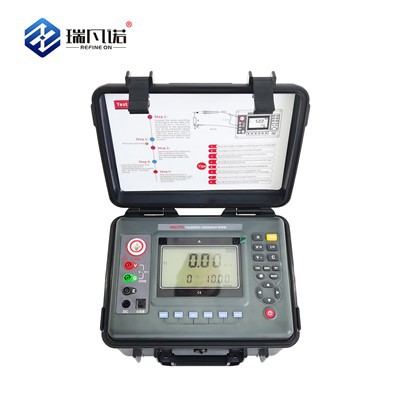
So, don’t hesitate to reach out to us if you have any questions or if you’re interested in learning more about our partial discharge testers. We look forward to hearing from you and helping you with your partial discharge testing needs.
Transformer Tester References
- Electrical Insulation Handbook, McGraw – Hill
- IEEE Standards on Partial Discharge Testing
- International Electrotechnical Commission (IEC) Publications on Partial Discharge Measurement
Refine On (Hebei) Electric Power Technology Co., Ltd.
Refine On (Hebei) Electric Power Technology Co., Ltd. is one of the most reliable partial discharge tester manufacturers and suppliers in China, also supports customized service. Please feel free to wholesale advanced partial discharge tester at competitive price from our factory. Contact us for quotation.
Address: Building 13, Liandong U Valley, No.64, Jing SAN South Street, Economic Development Zone, Mancheng District, Baoding City, China
E-mail: victor@transformer-test.com
WebSite: https://www.transformer-test.com/
