When I first started in the folding container supply business seven years ago, I’ll admit I had a pretty naive idea about the biggest challenge customers would face. Most people reach out because they need storage that’s easy to move, doesn’t take up permanent space, and can be deployed quickly—so the upside is obvious. What no one tells you when you’re selling these units, though, is that transporting a folded folding container isn’t just stacking a few boxes on a truck and hitting the road. It’s a process that requires a little forethought, a lot of respect for the product’s design, and an understanding of how different environments change the way you handle it. Over the years, I’ve worked with customers ranging from construction crews in the middle of the desert to event planners setting up pop-up storage for music festivals, and I’ve learned every mistake, every shortcut, and every best practice you could possibly need to get a folded container from our facility to your site in one piece. Folding Container
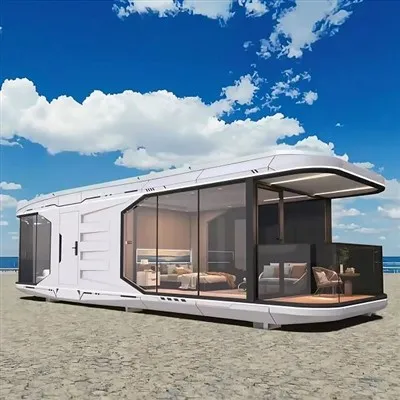
Let’s start with the basics: what a folded container actually is. Unlike standard steel shipping containers, which are big, rigid, and impossible to move without a flatbed truck, a folded container collapses down to about one-quarter of its full size. That’s the whole point—you don’t need a special crane to move it when it’s folded, it takes up way less storage space on your lot, and it’s far cheaper to transport long distances. But that compact design is also what makes handling it tricky. The panels are hinged, the locking mechanisms are precision-made to hold tight when extended, and if you drag it, stack it wrong, or expose it to the elements before it’s deployed, you can bend a frame, strip a bolt, or even warp a side panel. I once had a construction client in Montana call me in a panic because their driver had dragged a folded unit over a dirt access road, and the corner post had bent so bad they couldn’t extend it. That experience taught me the first rule: a folded container isn’t just a big metal box. It’s a modular assembly of moving parts that need to be treated like delicate equipment, not a pile of scrap steel.
The first step in any transport job is prepping the folded unit itself. A lot of first-time customers skip this part, thinking it’s just folding it up and locking the doors. But I walk every new client through a simple checklist before we even load it on a truck. First, we make sure all the internal latches, cross-supports, and hinge pins are secured. Even the smallest loose part inside can shift during transport, bang against the frame, and cause damage. I always tell my team to wrap the locking levers with a few layers of protective foam tape—this keeps them from catching on other parts of the load or the truck bed during transit. Next, we cover the floor. Folded containers have a base frame that sits flat on the ground, and if it’s sitting on gravel, concrete, or even wet grass, the edges can get scuffed, or small rocks can scratch the metal surface. At our facility, we use heavy-duty rubber mats for this, and we always remind customers to do the same when loading or unloading, not just when it’s being moved.
Then there’s the actual loading process. This is where most small companies mess up. A folded container weighs between 1,800 and 2,200 kilograms, depending on the size, so it’s too heavy to lift by hand, and you can’t just hoist it with a regular forklift without using the right attachments. The frame of a folded container has designated lifting points on the top and bottom corners—you have to use forklift forks that fit into those exact points, not under the side panels. I once watched a guy try to lift a folded unit by slipping his forks under the edge of one side, and the whole thing bent in the middle, like a tin can being squeezed. It was a total write-off, and he had to order a replacement from us, which set him back weeks on his project. That’s why I now include a free forklift attachment guide with every order, and I never let a customer leave our loading dock without walking them through exactly where to place the forks, how much pressure to apply, and how to balance the unit on the truck.
When it comes to the truck itself, size and weight distribution matter more than you’d think. Most folded containers fit easily on a standard 20-foot flatbed truck, but if you’re ordering multiple units at once, you can stack them, right? Wait, no—here’s another common mistake. You can’t stack folded containers directly on top of each other, because the bottom of one has hinged panels that aren’t made to support the full weight of another unit. If you stack two folded units, you have to put a plywood or steel support frame between them, evenly placed over the cross-supports of the lower unit. Even then, we only recommend stacking two max, and only for shorter hauls—anything over 500 kilometers, the risk of shifting or damaging the lower unit’s frame is too high. For long-distance moves, it’s better to use a 40-foot flatbed that can carry two folded units side by side, evenly spaced, with no stacking at all. We also advise customers to avoid using enclosed trailers for folded containers, unless they’re shipping in extreme weather like heavy rain or snow. Enclosed trailers can trap moisture against the metal, leading to rust, and the extra space makes it easier for the container to shift during transport. Open flatbeds with proper tie-downs are almost always the best choice.
Speaking of tie-downs, this is non-negotiable. I’ve seen too many drivers think “it’s just a folded box, it won’t move” and only use two straps. That’s a disaster. A folded container is a solid, rigid unit, but when it’s moving at 100 km/h, even a small shift can put pressure on the locking mechanisms and break them loose. We always recommend using four heavy-duty ratchet straps, each rated for at least 5,000 kilograms of tensile strength, placed at the four corner lifting points. You have to tighten them evenly, so the unit doesn’t tilt on the truck bed. And don’t forget to add a few extra straps if you’re driving on uneven roads or in areas with high wind. I learned this the hard way three years ago, when a customer in Texas was driving a load of four folded units through a storm, and one of the straps came loose. The third unit shifted forward, hit the second one, and bent a hinge so bad we had to ship a replacement hinge out and pay for a technician to fly out and install it. That cost me more than the extra straps would have, so now I don’t even hesitate to remind customers to double-check their tie-downs before they leave the yard.
Once the unit is on site, the unloading process is just as important as loading. A lot of people think unloading is easier, since you don’t have to secure it anymore, but that’s where a lot of damage happens, too. The same rule applies: use forklift forks in the designated lifting points, not the edges. Once it’s on the ground, you need to deploy it correctly to avoid straining the hinges. Most folded containers have a simple deployment guide—you unlock the side panels, lift each side until it clicks into place, then extend the internal supports—but if you try to deploy it too fast, or if the ground is uneven, you can bend a hinge or misalign a panel. I once had a client in Florida set up a container on sloped ground, and when he lifted the side panel, it caught on a small rock that was under the frame, and the whole panel twisted. It took a full day to fix, and he missed his deadline for a storage unit at a local beach. That’s why I always remind customers to level the ground first, remove any rocks or debris from the spot where they’re setting up, and take their time when deploying the unit.
Now, what about special cases? Because not everyone is moving a folded container to a flat construction site on a paved road. Over the years, I’ve dealt with every scenario: moving a unit down a muddy logging road in Oregon, moving it to a rooftop for a retail pop-up, even moving it across a border for a client in Canada. For off-road moves, like that logging road, I always recommend using a tracked vehicle instead of a standard forklift. The tracked vehicle has more weight distribution, so it doesn’t sink into the mud, and it’s easier to maneuver in tight spaces. For rooftop installations, we work with our clients to get the unit up using a crane, not a forklift—because rooftop access is too tight for a standard truck, so we use lifting points on the top of the container and a small mobile crane that can fit through gates and around buildings. For cross-border shipments, we work with customers to make sure the transport is compliant with international shipping regulations, including weight limits, documentation for the container’s materials, and any import fees that might apply. We also make sure the unit is properly sealed to prevent any damage during long ocean or land hauls, including using weatherproof covers if it’s going to be exposed to salt air or heavy rain.
Another thing that often surprises first-time buyers is storage for folded containers before they’re deployed. A lot of customers order a few units and store them on their lot for a few months before they need them, and they wonder how to keep them in good shape while they’re sitting. The same rules apply as when they’re being transported: keep them on a flat, debris-free surface, secure them with straps to keep them from shifting during wind or storms, and cover them to protect them from the elements. We offer custom-fit weather covers for folded containers, made from heavy-duty UV-resistant fabric, that fit snugly over the entire unit. This prevents rust, keeps water out of the internal mechanisms, and even protects against small dents from falling branches or tools. I once had a client who stored three folded units for six months in Arizona, and because he used our weather covers, they were in perfect condition when he deployed them. He told me he’d seen other units stored nearby that had rust so bad they couldn’t be extended, and he was glad he followed our advice.
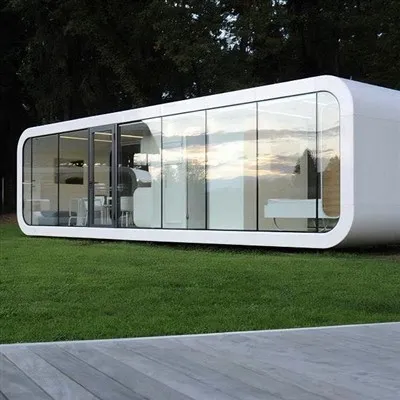
At the end of the day, the biggest takeaway from all these years is that transporting a folded folding container isn’t just about moving a big piece of metal. It’s about respecting the design, following the simple rules that protect the unit, and taking the time to do it right. You don’t need special equipment or a huge budget—you just need to know where to lift, how to secure, and how to handle the parts that make it work. Every time a customer reaches out to me with a problem after a bad transport, I can trace it back to one small mistake: lifting in the wrong spot, using too few straps, or not clearing the ground before unloading. When they follow the steps we lay out, though, their units arrive on site in perfect condition, ready to be set up and used in a matter of hours.
Space Capsule If you’re in the market for a folding container, and you’re worried about how to transport it to your site, or if you’ve had a bad experience with a previous shipment, don’t hesitate to reach out. We’ve worked with thousands of clients across industries, and we can help you with everything from prepping the unit for transport to recommending the right equipment for your specific site. We also offer on-site training for large orders, so your team knows exactly how to load, unload, and deploy your folded containers, no matter where you’re working. A folded container is supposed to make your life easier, not add stress to your project, and we’re here to make sure that’s exactly what happens.
References
- National Association of Container Manufacturers. "Best Practices for Transporting Folding Storage Units." 2021.
- International Maritime Organization. "Guidelines for Compact Storage Container Handling and Transit." 2019.
- Occupational Safety and Health Administration (OSHA). "Forklift Safety Protocols for Modular Equipment." 2020.
- American Society of Civil Engineers. "Site Preparation and Deployment Guidelines for Mobile Storage Structures." 2022.
- Global Folding Container Association. "Standards for Folding Container Transport and Storage." 2020.
Aoborui Seiko Technology (Weifang) Co., Ltd.
As one of the most professional folding container manufacturers and suppliers in China, we also support customized service. Please feel free to wholesale high-grade folding container made in China here from our factory. Welcome to view our website for more information.
Address: Building 38, Zhongnan High-tech, Weifang Yuandu Huizhi Industrial Park, No. 3999, Taixiang Street, Hanting District, Weifang City, Shandong Province
E-mail: admin@sino-abr.com
WebSite: https://www.sinoabr.com/
