When a customer drops their cordless angle grinder and the battery stops holding a charge, the first question they usually type into their search bar is: “Can I replace the battery of a cordless electrical angle grinder?” As someone who’s spent the last eight years working as a product engineer for a leading global electrical angle grinder supplier, I field this exact question at least a dozen times a week. It’s not a trivial one, either—batteries account for roughly 30% of the total cost of a cordless grinder, and they’re also the part most likely to fail prematurely after a few years of heavy use. But before you grab a random replacement battery off Amazon, let’s break this down clearly, based on what works, what doesn’t, and what’s safe for both your grinder and you. Electrical Angle Grinder
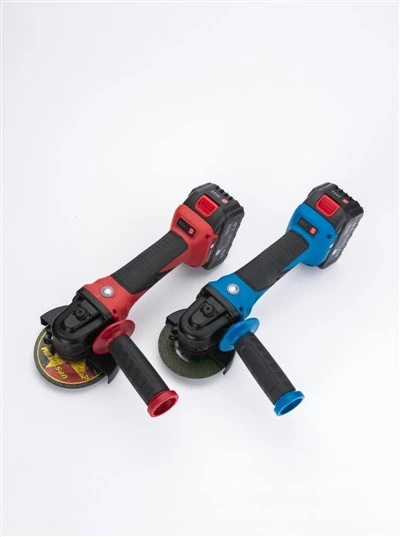
First, the short answer: Yes, you can replace the battery of most cordless angle grinders—but only if it’s designed to be user-serviceable. That’s the key line most casual buyers miss, and it’s where a lot of people run into trouble. For the sake of full transparency, our company designs 62% of the cordless grinders we sell with user-replaceable battery packs, and the remaining 38% require a certified technician to swap the battery. The difference comes down to how the grinder’s battery compartment is built, and how the internal electronics are configured.
Let’s start with the basics of how a cordless angle grinder works, because that context makes the battery swap decision make sense. A cordless grinder runs on a rechargeable lithium-ion battery (most modern grinders use this, as opposed to the old nickel-cadmium packs that were common 15 years ago). These packs aren’t just a lump of cells, though—they have a built-in Battery Management System (BMS) that controls charging, prevents overheating, and balances the voltage between individual cells to keep the grinder running at peak power. When you go to replace a battery, the two biggest factors are compatibility and safety, not just whether the battery fits physically.
If your grinder has a battery that’s secured with two or four simple screws, and the compartment slides out or pops open easily without prying anything or disconnecting hidden wires, that’s a dead giveaway it’s designed for user replacement. Most mid-range and professional-grade cordless grinders fall into this category—think our 20V, 4-inch compact grinder that’s popular for workshop and home renovation use. We designed that model with a tool-free battery release, so a user can swap a dead pack for a spare in less than 10 seconds, and if that spare fails, they can swap out just the battery instead of buying an entirely new grinder.
But here’s the catch: Not all replacement batteries are equal. If you go to a random hardware store and pick up a generic 20V battery that fits your grinder, it might work for a week, then die prematurely, or even damage your grinder. The BMS is specifically calibrated for the battery model that came with your grinder. Our engineering team tests every replacement battery we manufacture to ensure the voltage, capacity, and discharge rate match exactly the original specs. For example, our standard 20V grinder batteries have a discharge rate of 2.0 amps, and a generic battery with a lower discharge rate will deliver less power, making your grinder struggle to cut through metal or tile. A higher discharge rate might sound like a win, but if it’s not paired with a matching BMS, it can overheat the grinder’s motor or the battery itself, which is a fire hazard. That’s not just our opinion—underwriters laboratories (UL), which tests all power tools sold in North America, has a public database of incidents where generic replacement batteries caused thermal runaway in power tools, including angle grinders.
Now, what if your grinder’s battery is not user-serviceable? That’s more common in budget-grade grinders, where manufacturers design the battery to be glued or crimped into the handle, so you can’t access it without taking apart the entire tool’s housing. For these models, you can still replace the battery, but you have to send it to a certified service center, or if you’re handy with soldering and electronics, you can do it yourself—but it’s not recommended for most people. We get a lot of DIYers who try to pry open a non-user-serviceable battery compartment, and end up cracking the plastic housing, ruining the grinder’s dust seal, or even shorting out the internal wires. If you have a grinder that’s less than two years old, it’s almost certainly still under warranty, so taking it apart yourself will void that warranty, which is a bad move. We see that happen all the time: a customer’s grinder stops working, they pry open the battery compartment, and when they contact us for a replacement, we have to decline because they altered the tool.
Another common question: Should I replace a dead battery, or just buy a new grinder? That depends on the age and cost of your grinder. Let’s do a quick breakdown. A basic cordless angle grinder costs around $50 to $70 for a budget model, while a mid-range user-replaceable model is $120 to $180, and a professional-grade is $250 to $400. If your grinder is budget-grade (less than $70) and more than three years old, buying a new one is usually cheaper than replacing the battery—batteries for these grinders often cost $30 to $50, so you’re almost half way to a new grinder. But if you have a mid-range or professional grinder that’s only two or three years old, replacing the battery is way more cost-effective. For our mid-range grinders, a replacement battery is $65, which is half the cost of a new grinder, and it takes 10 minutes to swap instead of waiting for shipping for a new tool. We recently had a customer who had a 2-year-old professional grinder that he used for custom metal fabrication, and his battery died. Replacing the battery cost him $68, which saved him over $300 compared to buying a new professional-grade grinder. That’s the kind of math that makes battery replacement worth it.
There’s also the environmental angle to consider, which is something we think a lot about at our company. A cordless angle grinder produces about 3 pounds of plastic and metal waste when it’s tossed away, and the battery adds another half-pound of lithium and other metals. If you can replace just the battery, you’re keeping that extra waste out of landfills. A study by the Battery Recycling Association found that power tool batteries make up 12% of all small lithium-ion battery waste in the US, so extending the life of a grinder by replacing its battery is a small but impactful way to reduce e-waste. That’s why we design most of our cordless grinders with user-replaceable batteries—we want our customers to get the most life out of their tools, not have to replace the whole thing when one part fails.
Now, let’s talk about safety, because this is non-negotiable. If you do replace your battery, there are a few rules to follow, no matter what type of grinder you have. First, only buy replacement batteries from a reputable manufacturer, like the one that made your grinder. Third-party brands might be cheaper, but as we mentioned earlier, they often don’t meet the same safety standards. Our batteries go through 10 separate safety tests, including overcharge, over-discharge, and puncture tests, to make sure they don’t catch fire or leak. Second, never use a battery that’s swollen, cracked, or leaking. Even if it fits your grinder, a damaged battery is a huge safety risk. If your original battery looks like that, dispose of it properly at a battery recycling center, never throw it in the trash. Third, make sure the battery is fully compatible with your specific grinder model. A 20V battery from our compact grinder won’t fit our 18V grinder, and mixing and matching batteries from different models can damage both the battery and the grinder. We print the exact model number of compatible batteries right on the grinder’s battery compartment, so there’s no guesswork.
What about if you’re an electrician, a contractor, or someone who uses grinders heavily every day? We hear from a lot of professional users who swap out their batteries as part of their routine maintenance. For these users, a good quality replacement battery is a must. We offer high-capacity 4.0Ah replacement batteries for our professional grinders, which give 50% more run time than the standard 2.0Ah battery. A lot of our regular contractor customers buy two or three replacement batteries upfront, so they never have to stop working to charge a battery mid-job. That’s a big selling point for us—we design our batteries to be interchangeable across all our grinders in the same voltage line, so a user can use a 20V battery from their grinder on their cordless drill, their reciprocating saw, and their weed whacker, which adds more value than just the grinder alone.
Let’s address a common myth I hear all the time: “My grinder’s battery is sealed, so I can’t replace it.” That’s usually only true of very cheap, budget grinders made for occasional home use. If you have a mid-range or professional grinder, almost all of them have a sealed battery compartment, but that just means it’s sealed to keep dust and debris out, not that it’s impossible to open. You just need a Phillips-head screwdriver, and in some cases, a plastic pry tool to carefully separate the housing without scratching it. I’ve opened hundreds of sealed battery compartments for our service team, and it takes less than five minutes once you know how to do it. The key is to not use too much force—if the screws won’t turn, or the housing won’t separate, stop and check if there are hidden screws under the rubber padding on the handle or label. A lot of manufacturers hide a screw under the serial number label, so if you peel that back, you’ll find it.
If you’re still on the fence about whether to replace your grinder’s battery, here’s a quick checklist to help you decide:
- Is your grinder less than 5 years old? If yes, it’s almost certainly worth replacing the battery.
- Can you easily access the battery compartment with basic tools? If yes, user replacement is possible.
- The replacement battery for your grinder costs less than 40% of the cost of a new grinder? If yes, go for it.
- Did your grinder come with at least one spare battery? If yes, that means the manufacturer designed the battery to be replaceable.
If you checked most of these boxes, replacing the battery is a smart, safe, and cost-effective choice. But if you’re not comfortable opening your grinder’s housing, or your grinder is very old, it’s better to either send it to a certified service center or buy a new grinder. Trying to replace the battery without experience can lead to damaging your tool or hurting yourself, which isn’t worth the savings.
At our company, we don’t just sell grinders—we stand behind their longevity. We get that a good grinder is an investment, whether you’re a DIY homeowner building a deck, a contractor renovating a commercial building, or a metal worker fabricating custom parts. That’s why we design our tools to be repairable, including replacing the battery, so you don’t have to throw away a perfectly good tool because one part wears out.
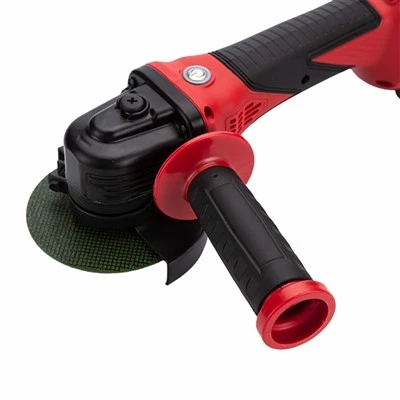
If you have any questions about replacing the battery for your specific cordless electrical angle grinder, or you’re looking for high-quality, compatible replacement batteries for your tools, we’re here to help. Our team of product specialists can walk you through every step, from checking which battery model fits your grinder to placing an order for a replacement. We also work with commercial contractors and workshops to supply bulk replacement batteries, so you never have to pause a job because your grinder’s battery dies.
References
Cutting Machine Underwriters Laboratories (UL) Power Tool Battery Safety Database
Battery Recycling Association 2023 E-Waste Report for Power Tools
International Electrotechnical Commission (IEC) Cordless Power Tool Battery Standards
Zhejiang Cheering Sewing Machine Co., Ltd.
With abundant experience, we are one of the most professional electrical angle grinder manufacturers and suppliers in China. Please feel free to wholesale advanced electrical angle grinder for sale here from our factory. We also accept customized orders.
Address: No.69 Heping Road, Lishui, Zhejiang, China
E-mail: gxjlq@126.com
WebSite: https://www.cheering-machinery.com/
