Hey there, folks! I’m here today as a supplier of the LWIR Cooled 640 to chat about something that we’ve all encountered but might not have thought about in relation to our nifty piece of tech—rain. Yup, that simple little thing we see falling from the sky can have some real impacts on our LWIR Cooled 640, and I’m gonna break it all down for ya. LWIR Cooled 640
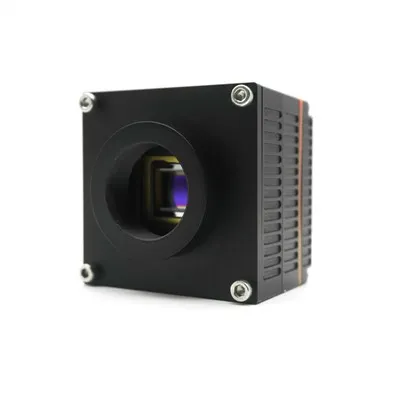
First off, let’s quickly go over what the LWIR Cooled 640 is. It’s a long – wave infrared (LWIR) cooled thermal imaging camera. With a 640×512 pixel resolution, it’s pretty top – notch when it comes to capturing high – quality thermal images. It’s used in a bunch of different fields, like security, surveillance, industrial inspections, and even some scientific research. So, it’s a versatile piece of gear that lots of folks rely on.
Now, when it comes to rain, the most obvious impact is on the optics. The LWIR Cooled 640 has a set of lenses that are designed to focus the infrared radiation onto its detector. When raindrops land on these lenses, they act like little magnifying glasses or diffusers, screwing up the way the infrared light is focused. You see, infrared light doesn’t interact with water in the same way that visible light does, but water droplets can still scatter and distort the infrared signals.
This scattering means that the images we get from the camera become less clear. The details start to blur, and it becomes harder to distinguish between different objects based on their thermal signatures. For example, in a security application, if you’re using the LWIR Cooled 640 to monitor a perimeter, rain on the lenses could make it difficult to tell if there’s a person moving around or just some heat – emitting equipment.
Another thing is the potential for water damage. Rain is, well, water. And if too much water gets into the camera, it can cause some serious problems. The LWIR Cooled 640 is a complex piece of electronics, and water can short – circuit the components. Even if it doesn’t cause an immediate short, it can lead to corrosion over time. Corrosion can eat away at the electrical connections and the metal parts inside the camera, which can eventually lead to a malfunction.
Moreover, the cooling system of the LWIR Cooled 640 is also at risk. These cameras use a cooling mechanism to keep the detector at a low, stable temperature. This is crucial because the performance of the detector depends on it being cold. If rainwater gets into the cooling system, it can disrupt its normal operation. For instance, it might cause the cooling fluid to leak or it could interfere with the heat – exchange process, which means the detector won’t be cooled properly. When that happens, the image quality takes a nosedive, and the camera might even stop working altogether.
But it’s not all doom and gloom. There are ways to mitigate these impacts. One of the simplest things is to use a protective housing. A good quality housing can shield the camera from direct exposure to rain. It should be waterproof and have a clear, infrared – transparent window for the lenses. This way, the raindrops will hit the housing instead of the camera’s optics.
We also recommend regular maintenance. After a heavy rain, it’s a good idea to check the camera for any signs of water ingress. Wipe down the lenses with a soft, dry cloth to remove any water droplets. And if you suspect that water has gotten inside the camera, it’s best to have it inspected by a professional.
Now, I know what you’re thinking. "All this talk about rain and problems, why should I still consider the LWIR Cooled 640?" Well, despite these potential issues, the LWIR Cooled 640 is still an amazing piece of equipment. Its performance in normal conditions is second to none. It offers high sensitivity, excellent image quality, and a long detection range. And with the right precautions, you can use it effectively even in rainy weather.
In a security setup, the ability to detect intruders based on their thermal signatures is invaluable. Even with some rain – related image degradation, the camera can still pick up the heat patterns of moving objects. In industrial inspections, it can spot overheating equipment, which is crucial for preventing breakdowns and accidents. And in scientific research, it can help study thermal processes that are otherwise invisible to the naked eye.
If you’re in the market for a high – quality LWIR camera, you should definitely consider the LWIR Cooled 640. We’ve been in the business for a while, and we know our stuff. We can provide you with all the support you need, from choosing the right accessories like protective housings to offering maintenance advice.
So, if you’re interested in learning more or want to start a conversation about purchasing the LWIR Cooled 640, don’t hesitate to reach out. We’re here to help you find the best solution for your needs. Whether you’re a small – scale business looking for security, an industrial giant in need of equipment inspections, or a researcher exploring new frontiers, we’ve got you covered.
LWIR Uncooled 640 References:
- "Infrared Thermal Imaging: Fundamentals, Research and Applications", some science publication
- Industry whitepapers on thermal imaging camera operation and environmental impacts
Xi’an Zhongke Lead Ir-Tech Co., Ltd.
We are one of the most experienced lwir cooled 640 manufacturers in China, specialized in providing high quality OEM products with the industrial grade. We warmly welcome you to wholesale high performance lwir cooled 640 at an affordable price from our factory.
Address: Building 8,Hard Technology Enterprise Community No.3000,Biyuan 2nd Rd,High-Tech Zone Xi’an,Shaanxi,China
E-mail: sales@lead-ir.com
WebSite: https://www.leadinfrared.com/
