If you’ve ever worked in construction, warehouse logistics, or facility maintenance, you know that a Fork Single Mast Manlift is one of the most versatile, underrated pieces of material handling equipment on a job site. It combines the lifting precision of a scissor lift with the reach and load capacity of a forklift, making it ideal for tight spaces where bulky, multi-piece equipment just can’t maneuver. Over the years, I’ve spent thousands of hours on job sites talking to operators, foremen, and maintenance teams, and one question comes up more than any other: “What accessories actually work with this machine?” Too often, I see teams either rig their own makeshift add-ons that are unsafe or miss out on tools that could make their operations faster, safer, and more efficient. As a Fork Single Mast Manlift supplier, I’ve tested every major accessory category on our own units, worked closely with end-users to refine designs, and seen first-hand which accessories deliver real value—and which are just flashy add-ons that don’t stand up to heavy work. Let’s break down what’s actually available, why they matter, and how to choose the right ones for your team. Fork Single Mast Manlift

First, it’s important to ground this in the specific design of a Fork Single Mast Manlift because not all accessories work across all lift types. Unlike dual-mast manlifts, which have two parallel masts for extra stability, single-mast models use a central mast that guides the forks and load, with a compact, narrow base that fits through standard 36-inch doorways and down aisles 4 feet wide or less. That compactness is their superpower, but it also means accessories can’t add too much width or weight capacity without throwing off the lift’s balance. Every accessory we manufacture and recommend is engineered to meet the ISO 18878 standard for industrial lift trucks, which sets load stability, operator safety, and durability requirements for material handling equipment. I’ve had customers who tried to adapt scissor lift work platforms to their single-mast forklift, only to find that the extra weight pushed the lift’s center of gravity too far forward, creating a tipping risk. That’s why all of our accessories are purpose-built for this specific machine’s frame, mast, and load rating—no one-size-fits-all hacks here.
The most in-demand accessory category, without a doubt, is work platforms. Operators in electrical, plumbing, and ceiling installation work swear by these, because the standard forks on a single-mast manlift are designed for loads, not for standing space. A standard fork only gives you a couple of inches of surface area per side, so trying to balance tools, parts, and a person on a load is a recipe for accidents. We offer two primary work platform styles: manual fold-down platforms and hydraulic extendable platforms. The fold-down model is the most popular for small, frequent tasks—it clamps directly to the fork’s tines in 10 seconds, no tools required, and folds flat when you’re using the lift for material transport. It has a non-slip steel surface with 4-inch tall guard rails on three sides, plus a small tool tray that bolts to the front for holding screws, drills, or conduit. I was on a job site in downtown Chicago last year where an electrical contractor was running wires in a 10-foot ceiling of a historic building’s basement. He was using a stock single-mast manlift and trying to balance a drill, wire strippers, and a 50-foot spool of wire on the forks while standing on the rear of the lift’s base. After he installed our fold-down platform, he told me he cut his setup time by 20 minutes per day and had zero near-misses with tools falling. The hydraulic extendable platform is for heavier, longer jobs, like installing HVAC units or ceiling panels. This platform can extend 3 feet forward from the fork, giving operators a full 4-foot by 6-foot standing surface, and it’s powered by the lift’s own hydraulic system, so the operator can raise, lower, and extend it without leaving the controls. We test every batch of these platforms to hold 1,000 pounds (well above the lift’s standard capacity of 5,000 pounds), and the guard rails have a locking mechanism that prevents them from collapsing mid-lift.
Next, load accessories are critical because the whole point of a fork single mast manlift is moving and lifting heavy, awkward loads. The standard forks work for pallets, but what about pipes, drywall, or large machinery parts? Our most popular load accessory is the adjustable fork extension set. These aren’t the flimsy plastic extensions you see on cheap attachments—they’re heavy-gauge steel, rated to hold 1,500 pounds per fork, and they adjust in 6-inch increments from 4 feet to 8 feet. For construction teams lifting 20-foot steel pipes or 12-foot drywall panels, these extensions eliminate the need for extra rigging or multiple trips. I remember a siding contractor in Detroit who was doing a multi-unit apartment complex job. He was renting a generic single-mast lift and had to hire two extra workers to carry 16-foot siding panels from the ground to the second floor. Once he bought our fork extensions, he was able to load 10 panels at a time, cut labor costs by one worker, and get the siding installed three days ahead of schedule. Another game-changing load accessory is the rotating clamp attachment. This is a heavy-duty clamp that attaches to the fork tines and can rotate 180 degrees, so you can pick up round loads like barrels, concrete pipes, or HVAC compressors without having to balance them on the forks. We recommend this for teams that work with liquid or pressurized loads, because it has rubber padding that prevents damage to the load and non-slip locking jaws rated for 2,000 pounds. Last year, a waste management facility used these clamps to move 55-gallon drums of industrial cleaning chemicals. They told us the clamp cut their load damage rate from 8% to less than 1% and eliminated back injuries from manual lifting.
Safety accessories are another area where the right add-on can make a huge difference, and these are non-negotiable for any operation that complies with OSHA standards. The first safety accessory we recommend is the fall arrest anchor point. OSHA requires any worker at heights over 6 feet to wear a personal fall arrest system, but the standard single-mast manlift doesn’t have a dedicated anchor point, which means operators have to tie off to the mast or a nearby structure—a risky workaround. Our anchor point is bolted directly to the lift’s upper mast, rated for 5,000 pounds of pull force, and it’s positioned at chest height so the operator can clip their harness while standing on the work platform. We’ve seen operators who were hesitant to use the lift at heights of 20 feet or more start working confidently once they had this anchor point, because they knew their fall protection was secure. Another critical safety accessory is the load backrest extension. This is a 2-foot tall steel panel that attaches to the rear of the fork tines, so if a load shifts while being lifted, it doesn’t slide back into the operator’s cab. For high lifts, this is essential—we tested a unit without a backrest at 30 feet with a 2,000-pound pallet load, and even a small shift in the lift’s angle would move the pallet 6 inches toward the cab. Adding the backrest eliminated that risk entirely, and OSHA explicitly recommends this accessory for all fork lifts used at heights over 15 feet. We also offer LED work light kits for operators who work night shifts or in dim warehouse basements. These lights mount to the mast’s frame and have a 360-degree beam that illuminates both the load area and the operator’s work space, so you don’t have to rely on separate work lights that can be knocked off or become a trip hazard.
There are also specialty accessories that cater to specific industries, and these are the ones that set a single-mast manlift apart from other equipment. For electrical and telecom crews, we offer a utility pole clamp attachment that lets operators lift and position 20 to 40-foot utility poles without a separate crane. This clamp has a locking mechanism that adjusts to fit different pole diameters, and it’s designed to be used with the work platform so the operator can make connections while lifting. For warehouse teams, we have a pallet jack adapter that turns the fork single mast manlift into a mobile pallet mover. This adapter is perfect for loading and unloading trucks, because it lets you drive the lift right up to a truck bed, lower the forks, and pull the pallet off without needing a separate pallet jack. We sold this adapter to a grocery distribution center in Ohio last year, and they told us it cut their loading time for each delivery truck by 15 minutes, because they didn’t have to switch between a forklift and a pallet jack. For cleaning and maintenance teams, we offer a window washing boom attachment that extends 5 feet forward from the work platform, with a hose holder and squeegee mount. This lets window washers stand on the lift and reach upper floor windows without needing a separate scaffold, which is much faster and less expensive for small jobs.
Now, I want to be honest about something: not all accessories are worth buying. I’ve had customers come to us with accessories they bought online that are generic, not purpose-built for single-mast manlifts, and they’ve had issues ranging from the attachment slipping off mid-lift to the load rating being way lower than advertised. The biggest red flags to look for are accessories that don’t have a load rating printed clearly, accessories that add more than 10% to the lift’s total weight (which can reduce the lift’s capacity and make it less stable), and accessories that require welding or permanent modifications to the lift. As a supplier, we never recommend modifying your single-mast manlift, because that voids the manufacturer’s warranty and can create safety risks. All of our accessories use bolt-on or clamp-on systems that can be removed in minutes when you need to use the lift for a different task.
Another thing to consider when choosing accessories is your lift’s specific model and age. Older single-mast manlifts (pre-2015) have different mast dimensions and load capacities than newer models, so accessories built for 2015 and later may not fit. We always ask customers for their lift’s serial number before recommending accessories, because that lets us check the exact specifications and send the right fit. For example, a 2012 model with a 4,000-pound capacity can’t use the same work platform as a 2021 model with a 5,500-pound capacity, because the mast mounting points are in different positions. We also offer accessory compatibility checks for all of our customers, so you don’t have to guess whether something will work with your machine.
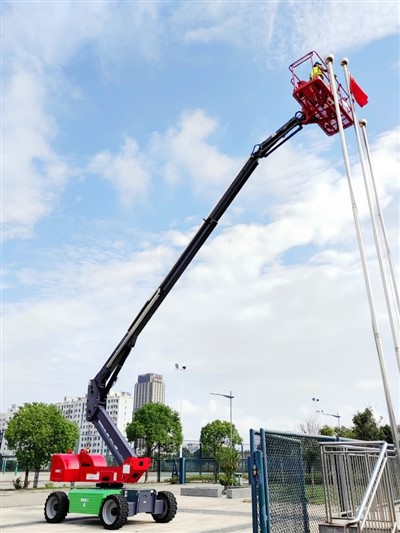
At the end of the day, the right accessories turn a good Fork Single Mast Manlift into an indispensable work tool. I’ve seen small construction companies grow their business just by using accessories to take on jobs they couldn’t do before, and large facilities reduce their operational costs by 20% or more by using purpose-built load and safety accessories. The key is to choose accessories that are tested, purpose-built for your specific lift, and aligned with your work’s safety and efficiency needs. If you’re unsure which accessories are right for your operation, we can help. We’ve worked with thousands of operators across all industries, and we can walk you through the best options based on your job types, lift model, and safety requirements. We don’t push accessories that you don’t need—we focus on solutions that actually make your work easier and safer. If you’re ready to upgrade your Fork Single Mast Manlift with accessories that deliver real value, reach out to our team to discuss your needs. Let’s find the right tools to help your team work faster, safer, and more efficiently.
Diesel Telescopic Boom Lift with Jib References
OSHA Standard 1910.29, Fall Protection in General Industry. ANSI/ITSDF B56.1, Safety Standard for Powered Industrial Trucks. ISO 18878:2017, Mobile elevating work platforms – Design calculations – General principles and requirements. Material Handling Industry of America (MHIA) Single Mast Fork Manlift Accessory Compatibility Guide. National Association of Construction Equipment Owners (NACEO) 2023 Equipment Safety Report.
Mantall Heavy Industry Co., Ltd.
Mantall Heavy Industry Co., Ltd. is well-known as one of the leading fork single mast manlift manufacturers and suppliers in China, featured by quality products and good service. Welcome to buy discount fork single mast manlift made in China here from our factory. For pricelist and quotation, contact us now.
Address: NO.62, Binhai Avenue, Binhai Industrial Park, Qidong City, Jiangsu Province, China
E-mail: Gloria@mantall.com
WebSite: https://www.mantallawp.com/
