Hey there, I’m Jake, and for the past seven years, I’ve been fielding a lot of questions from customers who come to me as a Pickup Truck Refrigerated Box supplier. The one that comes up most often after “how much does a unit like this cost?” is “why does my refrigerated box keep some things too cold and others not cold enough, even when the thermostat says it’s set right?” Most people assume it’s just a broken unit, but more often than not, it has everything to do with air circulation inside that box—something I’ve spent countless late nights testing in my warehouse loading dock, hauling temperature probes around, and troubleshooting for small food vendors, flower shops, and even medical supply teams that rely on these boxes to keep their goods intact. Let me break down exactly what’s happening with that air circulation pattern in a pickup truck refrigerated box, why it matters, and how we design our boxes to fix those common headaches. Pickup Truck Refrigerated Box
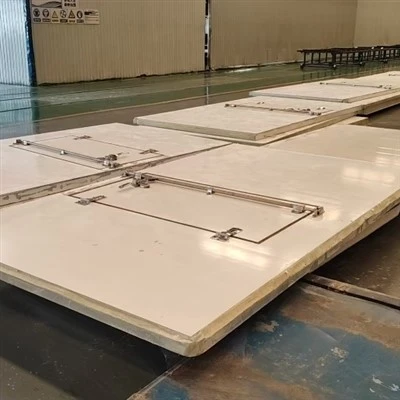
First off, if you’ve never thought about how a refrigerated box moves air, you’re not alone. Most of us are used to standing in front of a household fridge, feeling cold air flow out from the top, and assuming that’s how all cooling works. But pickup truck refrigerated boxes aren’t your kitchen fridge. They’re mounted on a truck, so they move at 50, 60, even 70 miles an hour down the highway. They’re often packed tight with odd-shaped goods—cases of soda, bunches of flowers, boxes of insulin, crates of produce that don’t stack perfectly. That on-the-go, irregular packing, plus the way the refrigeration unit is built, changes everything about how air moves inside.
Let’s start with the basics of how the refrigeration system generates that air flow. Every pickup truck refrigerated box has two main parts: the condensing unit (that’s the part mounted on the outside, usually on the front or top of the box, behind the cab) and the evaporator coil, which sits inside the box itself. The evaporator coil is the heart of the cooling, right? It’s a set of metal tubes filled with cold refrigerant, and when warm air passes over those tubes, it loses heat, turning that warm air into cold air. That cold air then has to move through every nook and cranny of the box to keep the temperature consistent. If the flow is blocked or uneven, you get those hot spots and cold spots that ruin your product.
Now, here’s the key circulation pattern specific to these boxes: it’s a top-to-bottom, front-to-back cycle, but it’s not the same as a home fridge. Our boxes are engineered so that the evaporator coil is usually mounted high up on the front wall of the interior, near the truck cab. When the refrigeration unit kicks on, a small, high-powered fan above or beside that evaporator blows cold air downward and back toward the rear of the box. As that cold air moves along the floor of the box (since cold air is denser than warm air, it sinks, duh—wait, I used to forget that too, and it cost a customer a whole batch of microgreens once), it absorbs heat from the product, the walls, and even the warm air that sneaks in when you open the door. That warm air then rises back up toward the front, where it’s pulled back toward the evaporator coil to be cooled again. That’s the closed loop: evaporator → cold air blow downward/back → warm air rise forward → repeat.
But wait, why do some people swear their lettuce is freezing at the front of the box and their drinks are still warm at the back? I’ve seen this a hundred times, and it almost always ties back to two things: how the circulation is designed, and how the user packs the box. Let’s talk about design first. A lot of cheap, no-name pickup truck refrigerated boxes cut corners on the fan and the ducting. They use a small fan that doesn’t have enough power to push cold air all the way to the back of a 10-foot box. Or they don’t have proper ducting to direct the air, so it just kind of hangs out near the evaporator coil at the front. That’s a problem for a lot of our customers, like the small craft brewer down in Austin who used a competitor’s box and couldn’t get their cans cold enough on long drives to festivals. When we installed our box, which has a 10-inch high-flow fan and a molded plastic duct that runs all the way from the front evaporator to the rear wall of the box, that cold air gets pushed back all the way, so every can is the same temperature by the time they arrive.
Another design quirk unique to pickup truck refrigerated boxes is the fact that they’re mounted on a moving vehicle, not sitting in a garage. I learned this the hard way a couple years ago when a customer called me panicking because his box’s temperature spiked during a 4-hour highway drive. We went out to his truck, checked the thermometers, and realized that when he was driving slow through city traffic, the circulation worked fine, but when he hit the highway at 65 mph, the wind resistance was pushing against the rear of the box, creating a positive air pressure that slowed down our internal fan, messing up the cycle. So we adjusted our fan design to have a speed control that adjusts based on road speed, and we added a small vent at the rear of the box that lets that excess air pressure escape without disrupting the internal air flow. That’s the kind of thing that only comes from actually using these boxes on the road, not just designing them on a computer.
Now, let’s talk about packing, because that’s where most users mess up the circulation without even knowing it. I once had a flower customer who lost a whole shipment of roses because she stacked them all tight against the rear wall of the box, blocking the entire space where the return air flows back to the evaporator. Remember that warm air has to rise back to the front? If you block that gap between the top of the product and the ceiling of the box, or the gap along the side walls, that warm air can’t get back to the evaporator, so it stays trapped at the back. Suddenly, you have a hot zone, and your roses wilt. Another common mistake is putting heavy, solid boxes at the bottom of the box, right where the cold air is flowing along the floor. That blocks the cold air from reaching anything above it. I always tell customers to stack their light, airy products (like flowers, bread, or leafy greens) on the bottom, where the cold air can circulate around them, and their dense, solid products (like beverages, frozen meat, or dairy) on top, so they’re not blocking the flow. And never, ever stack anything all the way to the ceiling—leave a 4-6 inch gap along the top of the product stack for that warm return air to flow. It sounds simple, but you’d be surprised how many people learn that the hard way.
Another thing I get asked about a lot is frost buildup, and how that affects circulation. If you’ve ever opened a refrigerated box after a few days of use and found a thick layer of frost on the evaporator coil, that’s a problem. Frost acts like an insulator, right? It blocks the warm air from reaching the cold evaporator coil, so the coil can’t cool the air properly, and the circulation slows down. A lot of cheap boxes don’t have a proper defrost cycle, so the frost builds up over time and kills the cooling. Our boxes have an automatic defrost cycle that runs every 8 hours of use, and it’s calibrated specifically for the conditions that pickup truck refrigerated boxes face—more vibration, more temperature swings when opening the door, more moisture from produce or ice. That means less frost, more consistent circulation, and less downtime for our customers. I had a medical supply customer who was hauling temperature-sensitive vaccines between clinics and a hospital, and he was having to defrost his old box every other day, which meant he had to stop mid-drive. Since we installed our box, he hasn’t had to do a manual defrost once in 18 months.
Wait, let’s not forget about door seals. The door of a pickup truck refrigerated box is the most common place for air leaks, and those leaks mess up the whole circulation pattern. If the seal is cracked, or not aligned properly, warm outside air seeps into the box, and cold air leaks out. That forces the refrigeration unit to work overtime, and it disrupts the natural flow of the internal air. I always recommend checking the door seal every 3 months, especially if you’re using the box for heavy loads that can bang against the door and misalign it. We use heavy-duty rubber door seals on our boxes that are designed to withstand the vibration of the truck, and we offer replacement seals for free if a customer has any issue with theirs. Small thing, but it makes a huge difference in circulation and temperature consistency.
Let me share a quick story that really drove this home for me. Last spring, I was working with a small vegetable farmer in central Ohio who was using a beat-up old pickup truck refrigerated box he’d bought used 5 years prior. He was selling at farmers markets 3 times a week, and he was losing about 10% of his produce every week because some of it would get wilted or frozen. He tried adjusting the thermostat, moving products around, even adding a fan inside the box, but nothing worked. When we looked at his circulation, we found two big problems: his old box had a tiny fan that couldn’t push cold air past the middle of the box, and he was stacking his produce all the way to the ceiling, blocking the return air gap. We replaced his old box with one of ours, showed him how to pack it correctly, and within a month, his produce loss dropped to less than 2%. He brought me a basket of the best tomatoes I’d ever had at the farmers market as a thank you. That’s why I do this—knowing that getting that circulation right isn’t just about numbers, it’s about someone’s livelihood.
Now, let’s get into some of the science behind it, for the people who want to geek out. The air circulation in a pickup truck refrigerated box is a forced convection loop, as opposed to natural convection, which is what happens in a regular fridge without a fan. Forced convection means we’re using a mechanical fan to move air, which is essential for the uneven, dynamic environment of a truck. The ideal air velocity inside the box should be between 0.5 and 1.5 meters per second. Too slow, and you get those hot spots; too fast, and you can dry out products like leafy greens or flowers. Our fans are calibrated to hit that sweet spot, even at highway speeds. We also use computational fluid dynamics (CFD) to test our box designs before we build them, which lets us map exactly how air flows through the box at every point—from the front near the cab to the rear door, along the side walls, under the shelves, and around stacked products. That’s how we know our duct design works, how we know where to place the evaporator, and how we know that our speed-adjusting fans prevent those highway wind resistance issues I mentioned earlier.
Another scientific point: the temperature stratification in the box. Because cold air is denser, it settles at the bottom of the box, and warm air rises to the top. That’s why we always recommend placing products that need colder temperatures (like frozen meat, dairy, or vaccines) on the lower shelves or closer to the front, where the cold air flow is strongest, and products that need slightly warmer temperatures (like flowers, bread, or some produce) on the upper shelves or toward the back. Most people don’t realize that the back of the box is usually a few degrees warmer than the front, because the cold air has to travel that extra distance. That stratification is normal, but it can be minimized with good circulation, which is why our boxes are designed to reduce that difference to less than 2 degrees Fahrenheit, even across a 10-foot box.
I’ve seen too many customers get frustrated because they think their refrigerated box is defective, when really it’s just a combination of poor design from the manufacturer and bad packing habits. That’s why we prioritize education as much as we do the actual box. When a customer buys one of our pickup truck refrigerated boxes, I give them a 30-minute walkthrough, show them how to check the circulation, how to pack the box correctly, how to maintain the fan and defrost cycle, and answer any questions they have long after the sale. Last year, we added a free 24/7 support line specifically for our box customers, because I know that if something goes wrong on a Saturday night when they’re hauling a load for a Sunday market, they can’t wait until Monday morning for help.
So, to wrap this up, the air circulation pattern in a pickup truck refrigerated box is a carefully balanced, top-to-bottom, front-to-back forced convection loop that relies on a well-designed fan, proper ducting, minimal frost buildup, and a good door seal. It’s not the same as a home fridge, because it has to work on a moving vehicle, accommodate irregular loads, and handle more frequent temperature swings from door openings. The biggest mistakes people make are blocking the return air gap, stacking products too tight, using a weak fan, and ignoring frost buildup. But with the right box design and a little know-how, you can keep your products at a consistent temperature, whether you’re driving across town to a farmers market or across the country to deliver medical supplies.

If you’re in the market for a pickup truck refrigerated box, and you’re tired of dealing with inconsistent temperatures, lost products, or endless troubleshooting, we’re here to help. We don’t just sell boxes—we help you design a system that works for your specific needs, whether that’s hauling produce, flowers, beverages, or temperature-sensitive medical goods. Reach out to our team to discuss your requirements and find the right solution for you.
Pickup Truck Refrigerated Box References
ASHRAE. (2022). Refrigerated Trucks and Trailers. ASHRAE Handbook: Refrigeration.
Zhang, Y., et al. (2021). Air Flow Distribution in Small-Medium Refrigerated Vehicle Boxes. International Journal of Refrigeration.
National Refrigerated Transport Association. (2020). Best Practices for Pickup Truck Refrigerated Unit Operation and Maintenance.
Hebei Three Sworn Brothers Special Purpose Vehicle Co., Ltd.
We are one of the most professional pickup truck refrigerated box manufacturers and suppliers in China, featured by quality products and good price. Please rest assured to wholesale durable pickup truck refrigerated box for sale here from our factory. Welcome to view our website for more information.
Address: No.19,Taihang South Road, Economic Development Zone,Qinghe County, Hebei Province
E-mail: miaj@cnreeferbox.com
WebSite: https://www.cnreeferboxes.com/
